Skip to content

Most people have a story about waking up, looking in the mirror and seeing stubborn “panda eyes” staring back. For your customers, dark circles are not only a cosmetic issue; they’re tied to stress, sleep, confidence and how “professional” or “fresh” they look in photos and on video calls.
Eye serum for dark circles is a focused treatment designed for the thin, fragile under-eye area, using brightening, de-puffing and hydrating actives in a lightweight texture that layers well under makeup. When done well, it can become a high-margin hero SKU that anchors your brightening, anti-fatigue or anti-aging line. When done poorly, it becomes a refund magnet with bad reviews.
In this long guide, we’ll walk through what really causes dark circles, which ingredients and textures work best, how to design claims and testing, and how to brief an OEM/ODM partner like Zerun Cosmetic to turn “eye serum for dark circles” from a vague idea into a scalable product family that sells and reorders.
What is an eye serum for dark circles and why does it matter for your brand?
An eye serum for dark circles is a lightweight, high-active formula specifically designed for the under-eye area, focusing on brightening discoloration, reducing the look of puffiness and fine lines, and improving overall radiance without causing irritation. For brand owners, it is a compact but high-value SKU that boosts average order value and reinforces your expertise in targeted skincare.
How is an eye serum different from an eye cream?
Eye serums focus on targeted performance with lighter, faster-absorbing textures, while eye creams focus on comfort, cushioning and long-lasting moisture. The serum is normally the “treatment” step, applied first in a routine, and the cream is the “comfort” or “sealing” step, especially for dry or mature skin.
In practical terms:
- Eye serum
- Texture: water-gel, fluid emulsion or very light gel-cream
- Focus: brightness, de-puffing, smoothing fine lines
- Users: customers who wear concealer, contact lenses, or dislike heavy eye products
- Routine: morning and/or night, often under makeup
- Eye cream
- Texture: richer cream, balm or butter-like emulsion
- Focus: comfort, barrier support, long-term moisturising
- Users: dry, mature or climate-exposed skin
- Routine: mostly evening or in dry climates as a last step
For your SKU architecture, a smart approach is one targeted eye serum for dark circles as the lead product, plus optional complementary richer eye cream for specific markets or channels that demand it.
Why does the eye contour need its own formula?
The skin around the eyes is thinner, has fewer oil glands and is in constant motion due to blinking and facial expressions. It is more prone to dehydration, fine lines, dullness, visible vessels and irritation. Applying a generic face product around the eyes can cause stinging, milia or swelling.
Eye serum for dark circles therefore needs:
- Lower irritancy potential than many face serums
- Careful selection of preservatives and fragrances
- Good slip and spreadability without heaviness
- Very low particle size for pigments or micas if used near eyes
This is why professional buyers often ask for a dedicated eye formula instead of simply relabelling a facial serum.
How does an eye serum for dark circles fit into a product line?
From a brand perspective, an eye serum for dark circles can:
- Complete a brightening or anti-fatigue routine (cleanser–serum–eye serum–moisturiser–SPF)
- Raise average basket value (small pack size, strong price per ml)
- Help justify a premium positioning with more sophisticated claims
- Provide great before–after content for e-commerce and social media
It is often one of the easiest products to bundle in sets and gift packs, because consumers perceive it as “specialized care” even if it sits in a small bottle or tube.
An eye serum for dark circles is a focused, light-textured treatment for the under-eye area that can become a high-value hero product in your line, provided you respect the sensitivity of the eye contour and position the formula intelligently within the routine.
What really causes dark circles and which types respond to eye serum?
Dark circles are usually not caused by a single factor. They often arise from a mix of pigmentation, visible blood vessels, shadowing from bone structure, thinning skin, lifestyle habits and even allergies. Eye serum for dark circles works best on pigment-related and lifestyle-related dark circles, and can moderately help vascular and texture-related shadows with the right actives and routine.
How can you tell pigment, vascular and structural dark circles apart?
Pigmented dark circles look brown or grey; vascular dark circles look blue or purple; structural dark circles look like shadows created by hollows under the eyes. Many consumers have a mixture of all three, which is why one single active is rarely enough for meaningful improvement.
In a simple way:
- Pigment-driven
- Appearance: brownish/grey rings
- Causes: UV exposure, genetics, post-inflammatory marks, rubbing
- Responds to: brighteners, sun protection, soothing actives
- Vascular-driven
- Appearance: bluish or purple tone
- Causes: visible vessels under thin skin, congestion, fluid retention
- Responds to: ingredients that support microcirculation, de-puffing, cooling tools
- Structural / hollowing
- Appearance: deep tear trough shadow, often worse with age or weight loss
- Causes: bone structure, fat pad changes, collagen loss
- Responds to: optical diffusers, skincare for support, but often requires aesthetic procedures for major correction
Your eye serum for dark circles should clearly target pigment and fatigue-related cases, with bonus support for vascular and texture issues. Structural hollows should be discussed carefully in FAQ and education content so you don’t over-promise.
How much of dark circles is lifestyle and how much is genetics?
Some people are simply born with eye contours that show darkness more easily, due to bone structure, skin tone and vessel visibility. However, lifestyle can dramatically worsen the picture: late nights, screens, dehydration, salty food, alcohol and sun exposure all make dark circles look deeper and more stubborn.
From a brand messaging angle, this is useful:
- You can position your eye serum for dark circles as part of a “eye fatigue” or “digital lifestyle” solution.
- You can share easy, practical habits that amplify product results, such as consistent sleep, SPF around the eyes, gentle makeup removal and occasional cold compresses.
- You can frame your product as helping customers look more rested, even on days when life is far from perfect.
This narrative is relatable, especially for busy professionals and new parents who are often your best customers for high-value eye care.
When is eye serum alone not enough to fix dark circles?
Eye serum is a powerful cosmetic tool, but there are situations where it can only partly improve the appearance. Being honest about those limitations can actually build more trust and reduce returns.
Examples where results may be limited:
- Very deep tear trough hollows in older age groups
- Severe, long-term allergies with constant rubbing and swelling
- Medical conditions affecting blood flow or pigmentation
- Heavy smoking or extreme sleep deprivation without lifestyle change
In these cases, your communication can mention that eye serum for dark circles helps improve the look of the under-eye area, but that structural or medical drivers may require professional treatments.
Dark circles usually have mixed causes. Eye serum does best with pigment and lifestyle-related tiredness, offers moderate support for vascular issues and texture, and has limited impact on deep structural hollows. Educating customers on this balance can reduce unrealistic expectations and improve satisfaction.
Which ingredients work best in an eye serum for dark circles?
The best eye serum for dark circles blends gentle brighteners, humectants, microcirculation support, barrier-strengthening agents and soothing antioxidants in a carefully balanced way. Levels must be tuned for the eye area, which is more reactive than the rest of the face. You want visible improvement without sting, redness or dryness.
Which brightening actives help reduce the look of dark circles?
Brightening actives for the eye area should focus on harmonising tone rather than aggressive, peel-like effects. The goal is to soften the appearance of pigment and dullness while keeping the barrier calm and resilient.
Common choices include:
- Niacinamide – supports brightness, barrier function and overall texture.
- Vitamin C derivatives – more stable and gentle than pure ascorbic acid; help with radiance and antioxidant protection.
- Alpha-Arbutin – assists with targeted pigmentation issues in conservative doses.
- Licorice and botanical extracts – help with uneven tone and post-inflammatory marks.
- Tranexamic acid in low levels – used in some lines for stubborn uneven tone.
These are usually combined into a multi-pathway system instead of relying on one single superstar ingredient.
How do caffeine, peptides and circulation boosters support results?
Many dark circles are linked to visible vessels, fluid retention and tired microcirculation. Caffeine and certain peptides are ideal partners to brighteners, helping eyes look less puffy and more awake.
Key players:
- Caffeine – often used for its de-puffing and vessel-constricting effects.
- Vascular and drainage-supporting extracts – such as horse chestnut derivatives or butcher’s broom.
- Peptides – specific peptide blends can target firmness, resilience and the appearance of fine lines, reducing the “tired” look even if pigment is not very strong.
These ingredients are also excellent for bridging claims between dark circles, puffiness and fine lines in a single product.
Are retinol and acids suitable for eye serum for dark circles?
Retinol and acids can be used in eye formulas, but they require very careful formulation and customer education. Overly aggressive systems are more likely to lead to redness and flakiness than to renewed customer orders.
Safe practice usually includes:
- Using lower levels of encapsulated retinol or milder retinoid derivatives, supported by ceramides and soothing actives.
- Preferring PHAs or very gentle AHAs at modest levels if resurfacing is desired.
- Emphasising slow introduction, evening use and avoiding direct contact with the eye itself.
These technologies are more relevant for lines that position themselves strongly on anti-aging rather than dark circles alone.
What supporting ingredients create comfort and safety?
Even the best brightening and de-puffing system will be rejected by consumers if the formula feels tight, dry or irritating. Supporting ingredients are the “bodyguard team” for your active stack.
Helpful categories:
- Humectants – glycerin, hyaluronic acid, betaine, panthenol for comfortable plumpness
- Barrier lipids – ceramides, cholesterol, fatty acids, squalane or certain plant oils
- Soothers – bisabolol, allantoin, Centella asiatica extracts, oat derivatives
- Texture builders – polymers and emulsifiers that create a gentle, cushiony slip
These elements transform a technical formula into a pleasant daily ritual.
Ingredient architecture for eye serum for dark circles
| Component group | Example ingredients | Role in formula |
|---|---|---|
| Brightening system | Niacinamide, vitamin C derivative, arbutin | Support more even tone and radiance |
| Anti-fatigue system | Caffeine, drainage-supporting extracts | Help reduce look of puffiness and tiredness |
| Firming and smoothing | Peptides, low-dose retinoid derivatives | Improve appearance of fine lines and firmness |
| Hydration and comfort | HA, glycerin, panthenol, betaine | Maintain water balance and soft feel |
| Barrier and protection | Ceramides, squalane, antioxidants | Help keep the delicate area resilient |
| Sensory and support | Emulsifiers, polymers, mild preservatives | Texture, stability, safety |
Effective eye serum for dark circles uses a multi-pathway architecture: gentle brighteners, circulation-supporting actives and firming peptides wrapped in a hydrating, soothing base that respects the sensitivity of the eye area. The full system matters more than any single “hero” ingredient.

How should you design texture, fragrance and packaging for eye serum customers will love?
The same INCI list can feel cheap or luxurious depending on texture and packaging. For eye serum for dark circles, customers want a formula that sinks in quickly, never pills under concealer, feels refreshing rather than greasy, and comes in packaging that looks premium and is easy to control around the eyes.
Which textures match different skin types and markets?
Texture is not only about skin type; it also reflects climate, culture and usage habits. Some markets love light, fluid gels, while others prefer a creamier, comforting feel. Designing for your primary region is crucial.
| Texture style | Sensation and finish | Ideal users and markets |
|---|---|---|
| Water-light gel serum | Very light, quick-setting, no residue | Oily/combo skins, hot and humid climates |
| Gel-cream emulsion | Cushioned slip, semi-matte or natural finish | Normal skins, most global markets |
| Cream-in-serum emulsion | Richer feel with still light spread | Dry/mature skins, cooler or drier climates |
| Bi-phase or oil-in-serum | Silky, nourishing, slight glow | Night routines, dehydrated or dry eye contours |
Some brands launch two companion textures (for example, “day gel” and “night serum-cream”) under one eye concept, giving customers choice without multiplying all the back-end work.
How important is fragrance in an eye serum for dark circles?
Fragrance is a sensitive topic in the eye area. Some consumers adore a soft, relaxing scent, while others insist on fragrance-free formulas due to sensitivity or personal preference. For eye serum, a very gentle approach works best.
Options:
- Fragrance-free with a neutral base scent, ideal for sensitive-skin positioning.
- Very low-level, soft fragrance that avoids common allergens and strong essential oils.
- Natural-leaning aromas with careful selection for eye-area appropriateness if your brand is more botanical.
If you plan to position your eye serum for dark circles as suitable for sensitive eyes or contact lens wearers, fragrance-free or extremely low-level options are often safer.
Which packaging types work best for eye serum?
Packaging must protect the formula from air, light and contamination, while delivering the right dose to a very small area. It also strongly influences perceived value and shelf impact.
Common formats:
- Slim airless pump
- Protects sensitive actives and ensures hygienic dispensing
- Feels premium, suitable for selective retail and online zoom shots
- Soft tube with metal or ceramic tip
- Combines packaging and applicator in one
- Cooling effect reinforces de-puffing message
- Pen or roller applicators
- Travel-friendly, intuitive to use
- Great for social content demonstrating “swipe and go” routines
For a B2B project, you also need to consider MOQ, decoration options, lead times and compatibility testing between formula and material.
Do applicators and tools really improve customer perception?
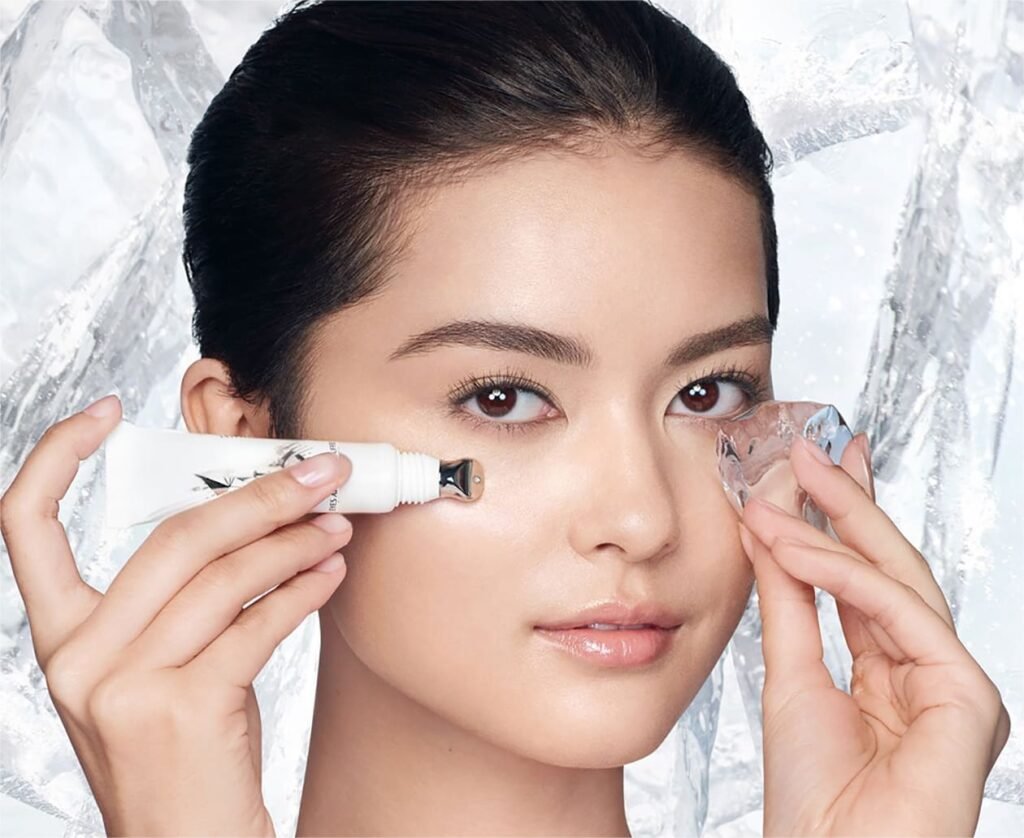
Metal or ceramic tips and small massage heads may not change your formula’s INCI list, but they can dramatically shift how customers feel about the product. A cool, massaging tip can make the morning routine feel more like a mini spa treatment and justify higher price points.
Benefits to highlight:
- Refreshing feel that supports de-puffing claims
- Gentle massage to help distribute product evenly
- Hands-free application for those who dislike touching the under-eye area
These details also look impressive in photography and video, helping your eye serum for dark circles stand out in crowded e-commerce listings.
Texture and packaging decide whether your eye serum for dark circles is used every day or abandoned after a week. Light but cushioned formulas, carefully handled fragrance and smart, protective packaging with intuitive applicators create a memorable and repeat-worthy experience.
How do you position and claim an eye serum for dark circles safely and convincingly?
Positioning and claims are where marketing, R&D and regulatory realities meet. An eye serum for dark circles should promise visible improvement while staying clearly within cosmetic rules. Strong but careful language, supported by simple tests and honest visual material, helps your product perform well in search, on marketplaces and in AI-generated overviews.
What wording works for dark circle claims in cosmetics?
Most regions treat eye serum for dark circles as a cosmetic, not a medicine. That means your copy should focus on improving the appearance and comfort of the under-eye area, rather than promising to cure medical issues.
Safer directions:
- “Helps reduce the look of dark circles and tired under-eyes”
- “Visibly brightens the under-eye area over time”
- “Helps smooth the appearance of fine lines and puffiness”
- “Leaves eyes looking more rested and refreshed”
Avoid:
- “Cures dark circles”
- “Eliminates dark circles permanently”
- “Treats vascular disorders”
- “Works like filler or surgery”
Which tests give your claims credibility?
You do not always need enormous clinical trials, but you do need reasonable support for the story you tell. Combining instrumental measurements with consumer evaluations creates a balanced evidence set for your eye serum for dark circles.
Helpful testing directions:
- Skin tone evaluation around the eye using imaging or colorimetry
- Standardised photography evaluated by graders or dermatologists
- Self-assessment questionnaires capturing how users perceive brightness, tired look and puffiness
- Dermatological and, where needed, ophthalmological evaluations for tolerance
How should you use before–after visuals for eye serum?
Before–after photographs are one of the most powerful tools for eye serum for dark circles. They also draw attention from regulators and advertising authorities if used carelessly. The key is realism and transparency.
Good practice:
- Keep lighting, camera angle and facial expression consistent
- Avoid over-editing; small corrections are fine, but changing skin structure or colour is not
- Clearly show time interval and usage instructions (for example, “after 8 weeks of daily use”)
- Use captions such as “Individual results may vary” where appropriate
For B2B, these images become part of your sales deck to convince distributors, retailers and influencers that your eye serum for dark circles is more than just words on a label.
Claim language, tests and visuals build the credibility layer around your formula. When all three are aligned, you can talk confidently about your eye serum for dark circles without drifting into risky medical territory.
How can you brief an OEM/ODM partner to develop the right eye serum for dark circles?
A clear and realistic brief is one of the best investments you can make before talking to factories. When you approach an OEM/ODM partner such as Zerun Cosmetic, the quality of information you provide will strongly influence timelines, costs and how quickly you receive samples that are close to your vision.
What should be included in a professional product brief?
An effective brief covers the “who, what, where, how much and by when” of your eye serum for dark circles. It should be concise but concrete, avoiding vague phrases like “premium but affordable” without further explanation.
You can structure the core elements like this:
| Brief element | Example for eye serum for dark circles |
|---|---|
| Target users | Men and women 25–45, urban, screen-heavy lifestyle |
| Key problems | Dark circles, tired look, mild puffiness, first fine lines |
| Promise | Brighter, more rested-looking eyes; suitable under makeup |
| Active directions | Brighteners, caffeine, peptides, soothing and hydrating actives |
| Skin type and region | Normal/combination, including sensitive; main markets US/EU/Asia |
| Texture | Lightweight gel-cream, non-sticky, no pilling with concealer |
| Packaging ideas | 15–20 ml airless pump or tube with metal tip |
| Claims and tests | Appearance-based claims with 4–8 week consumer test and photography |
| Regulatory scope | Compliant with target region cosmetic rules and major platforms |
| Target price and MOQ | Indicate desired ex-factory price range and acceptable first MOQ |
| Timeline | Preferred launch window and sampling milestones |
Sending a structure like this in your first contact already sets you apart from many buyers and allows the OEM/ODM to respond with specific, actionable options.
How do you discuss cost, MOQ and active levels with your factory?
Eye serum for dark circles often carries a higher ingredient cost per kilo than a basic moisturiser but is sold in smaller packs at a strong retail price. With a good margin window, you can invest in better actives and packaging, but you still need to manage costs for scale.
When speaking with your partner:
- Share your target retail price and expected margin structure, not just “low cost please”.
- Ask for two or three formula tiers (for example, “core formula”, “enhanced peptide formula”, “luxury multi-active formula”) and understand what changes between them.
- Clarify MOQ for bulk and packaging early, especially for custom components or colourful decoration.
- Think ahead about future line extensions so the partner can design a base concept that can later be adapted into eye cream, eye gel masks or related SKUs.
A transparent conversation makes it easier for your OEM/ODM partner to recommend a formula that is realistic instead of over-designed but impossible to sustain economically.
Why choose Zerun Cosmetic for an eye serum for dark circles project?
Zerun Cosmetic is a factory with years of experience in custom skincare manufacturing, supporting both small and medium-sized buyers and high-end brands. For an eye serum for dark circles project, this experience translates into:
- R&D teams familiar with eye-area safety, texture tuning and ingredient synergy
- Access to a wide library of actives suitable for global markets, including brighteners, peptides and soothing agents
- Flexible support for private-label bases as well as fully custom development
- Packaging sourcing capabilities that cover airless, tubes with applicators and more
- Ability to provide samples and design support so your brand can move from idea to product smoothly
Because Zerun already works with brand owners for custom logo and packaging, the jump from project concept to launchable eye serum for dark circles is shorter and more predictable.
A precise brief and open cost discussion make your OEM/ODM collaboration much smoother. With a partner like Zerun Cosmetic, you can move quickly from concept sketches and competitive benchmarks to real, testable eye serum formulas and matching packaging concepts.
Conclusion
Eye serum for dark circles sits in a sweet spot where science, storytelling and daily habit all meet. Customers want lighter, non-greasy textures that sit well under makeup, but they also want to see real improvement in dark circles, puffiness and the “tired” look that shows up in photos and video calls. At the same time, regulators and platforms expect claims and safety standards that respect the delicate eye area.
By understanding the true causes of dark circles, selecting a balanced mix of brighteners, circulation-supporting actives, peptides and soothing hydrating agents, and then wrapping that formula in a suitable texture and protective packaging, you can create an eye serum for dark circles that feels as good as it performs. When you support it with honest claims, simple tests, strong visuals and thoughtful launch planning, it can grow from a single idea into a long-term hero product and the anchor of your eye contour range.
If you are ready to turn this concept into a real product, Zerun Cosmetic can help you move from initial brief to lab samples, testing, packaging and mass production. With years of experience in custom skincare, our team can support both private-label solutions and fully bespoke formulas that reflect your brand’s identity. Reach out to discuss your goals, markets, MOQs and timelines, and let’s build an eye serum for dark circles that your customers will recommend and reorder.