Skip to content
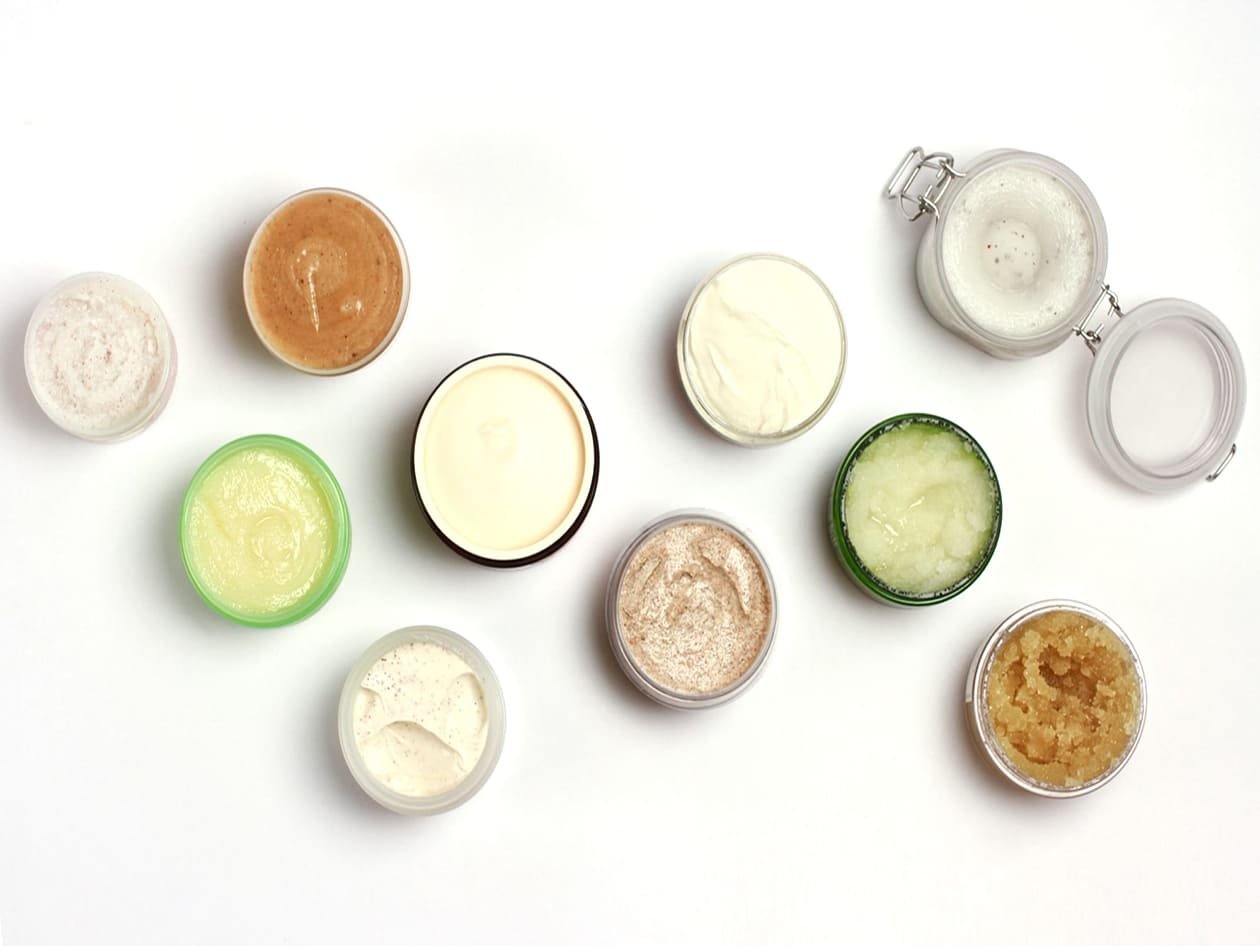
Most people don’t look up “best body scrub” because they love shopping for shower products. They look it up after a few very specific moments: lotion isn’t helping the roughness, legs still feel bumpy after shaving, upper arms have that persistent “strawberry skin” texture, or the back and chest keep feeling congested no matter how clean the skin is.
A body scrub can fix the “rough and dull” feeling fast—but it can also create the classic regret spiral: stinging after the shower, tightness, itchiness, or bumps that look worse because the skin is irritated. That’s why the best body scrub is rarely the harshest one. It’s the one that matches your skin tolerance and your goal, rinses the way you like, and fits the frequency you’ll actually stick to.
Instead of a random “top 10,” this guide shows you how to pick the right body scrub for your skin and routine—and how to use it so the results feel obvious and comfortable.
What makes the best body scrub different for different skin types?
“Best” changes depending on how your skin reacts to friction, how dry you get after showering, whether you shave, and whether bumps are coming from keratin buildup, ingrowns, sweat + friction, or a little bit of everything. The biggest mistake is treating all body texture problems like they’re the same problem.
Which skin types should use a gentler scrub approach?
If your skin often turns pink quickly, feels hot after exfoliating, or stings when you apply lotion, you’ll get better results with gentler exfoliation and fewer variables. A scrub can still work for you—your “sweet spot” is simply smaller.
A quick self-check that’s surprisingly accurate: after showering, if your skin feels tight within 10 minutes, you’re likely pushing the barrier too hard (hot water, harsh cleanser, too-frequent exfoliation, or all three). In that case, a gentler scrub texture and lower frequency will usually improve smoothness more than a “stronger” scrub ever could.
In practical terms, gentler usually means finer or smoother particles, a base with more slip, and fewer days per week. It also means not pairing exfoliation with other stressors on the same day, like shaving plus hot water plus fragrance-heavy products.
How do oily or acne-prone body areas change what’s best?
Back and chest skin often behaves differently from legs and arms. It deals with sweat, sunscreen, fabric friction, hair products rinsing down the body, and sometimes incomplete cleansing after workouts. For these areas, the best body scrub is often the one that rinses clean and doesn’t leave a heavy film.
A buttery, oily scrub can feel amazing on dry legs, but on acne-prone back skin it can feel “coated,” especially in warm climates. That doesn’t mean oils are bad. It means you want a scrub that rinses without leaving a residue that mixes with sweat and friction.
If you deal with body breakouts, the simplest routine upgrade is usually timing: rinse and cleanse soon after sweating, then exfoliate gently a couple of times per week—rather than trying to scrub daily to “catch up.” Daily friction tends to make acne-prone body skin more inflamed, not clearer.
Does dry skin need a scrub or just a better moisturizer?
Dry skin often needs both, but in a specific order. If dead skin builds up, moisturizer can sit on top and you still feel rough. A good scrub removes the dead-skin layer so hydration actually sinks in and stays.
Dry skin usually responds best to:
- lower frequency exfoliation (often 1–2 times weekly)
- a scrub base that feels comfortable and not “squeaky”
- immediate moisturizing while skin is still slightly damp
If your legs feel rough no matter what lotion you use, try this one change for two weeks: scrub once weekly with light pressure, then moisturize immediately after each shower. For many people, that works better than switching lotions repeatedly.
| Skin type / situation | Best scrub direction | Suggested starting frequency | What usually backfires |
|---|---|---|---|
| Sensitive or reactive | very gentle physical or mild hybrid | 1x/week | harsh grit, heavy fragrance, scrubbing after shaving |
| Oily / acne-prone back & chest | clean-rinsing scrub or chemical support | 1–2x/week | oily film + tight clothing + sweating |
| Dry / flaky | gentle physical + barrier-friendly base | 1x/week | over-scrubbing and skipping moisturizer |
| Combination (some dry, some rough) | targeted scrubbing by zone | 1–2x/week | treating the whole body the same way |
| Frequent shaving | gentle exfoliation on non-shave days | 1–2x/week | scrubbing right after shaving |
If you get one idea from this section, make it this: the best body scrub is the one your skin feels calm after. Calm skin improves. Angry skin just argues back.
Which type of exfoliation is best: physical, chemical, or hybrid?
People often frame this as a debate. In real life, it’s more like a toolbox. Physical exfoliation is great for instant smoothness. Chemical exfoliation is great for steady texture improvement. Hybrid approaches can work beautifully when used with restraint.
When is physical exfoliation the best choice?
Physical exfoliation is the best choice when your goal is immediate softness and polish. It removes surface dead skin right away, which is why it’s satisfying. Done correctly, it can make skin feel smoother after one shower.
What makes a physical scrub feel “good” rather than harsh is mostly about particle design and slip. Smooth, rounded particles plus a base that glides reduces micro-irritation. Coarse, jagged particles plus high pressure is when people start feeling raw and stingy afterward.
If you love the instant feel of a scrub, you don’t need to give it up. You just need the right texture and technique.
When is chemical exfoliation the better option?
Chemical exfoliation is often better when bumps, uneven texture, and ingrowns are your main issue—especially when the texture comes back quickly after scrubbing. That “comes back fast” feeling is often a sign you’re polishing the surface without addressing the underlying buildup pattern.
Chemical exfoliation tends to feel less dramatic in the moment, but more consistent over time. It’s also often easier to control: you can choose frequency and strength without relying on pressure and friction.
Some people prefer chemical exfoliation because it’s less “work” and less risk of over-scrubbing. Others prefer physical because it feels more immediate. Both can be valid—your skin decides.
When does a hybrid scrub make the most sense?
Hybrid scrubs can be the best choice when you want the immediate polish of physical exfoliation plus the steadier smoothing support of chemical exfoliation. The key is to treat hybrids like a weekly polishing tool, not a daily cleanser.
Hybrids tend to work best if:
- your skin is not very reactive
- you’re not scrubbing right after shaving
- you’re using light pressure and limiting frequency
If a hybrid scrub makes your skin sting, turn pink, or feel tight the next day, it’s usually not a “bad product.” It’s too much for your current routine. Reduce frequency first before deciding it doesn’t work.
| Type | Best for | What it feels like | Who should be cautious |
|---|---|---|---|
| Physical scrub | instant smoothness, rough patches | immediate polish | sensitive skin, post-shave zones |
| Chemical exfoliation body product | KP, ingrowns, uneven texture | gradual smoothing | very dry or reactive skin (start slowly) |
| Hybrid scrub | glow + smooth routines | instant + steady | frequent shavers, easily irritated skin |
A simple starting point that fits most routines: use a physical scrub 1–2 times per week. If you’re using chemical exfoliation on the body, start 2 times per week and only increase if skin stays comfortable.
How do you choose the best body scrub for specific problems?
This is where “best body scrub” becomes practical. You don’t choose a scrub in a vacuum. You choose it for a problem: KP bumps, ingrowns, dullness, rough elbows, or a back that always feels congested.
What’s the best body scrub for KP and “strawberry skin” on arms and thighs?
KP is often about keratin buildup and follicle texture. Scrubbing harder usually makes it worse, because it adds irritation to a problem that already involves follicles.
A good KP approach is steady and low-drama:
- gentle exfoliation, repeated consistently
- moisturizing that reduces dryness and friction
- avoiding daily aggressive scrubbing
For many people, chemical support a few times per week plus a gentle physical polish once weekly works better than any “strong scrub” routine. If you do prefer a physical scrub, choose fine, rounded particles and keep pressure light.
A sign you’re on the right track is not “all bumps vanish in a week.” It’s that the skin feels less rough, looks more even in normal lighting, and doesn’t feel inflamed after exfoliating.
What’s the best body scrub for ingrown hairs and shaving bumps?
Ingrowns are often a timing issue as much as a product issue. Scrubbing right after shaving can make the problem worse: micro-cuts plus friction plus fragrance is an easy way to irritate follicles.
A better setup is:
- exfoliate on non-shave days
- keep pressure light
- moisturize so skin stays flexible, not tight
If underarms or bikini line are involved, keep the routine especially gentle. Those areas can react quickly, and “stronger” is rarely the answer.
What’s the best body scrub for dullness and uneven-looking body skin?
Dullness is usually dead-skin buildup plus dehydration. A gentle physical scrub or a mild hybrid can be perfect here, because you want that immediate “polished” look.
For dullness, the routine matters as much as the scrub:
- exfoliate 1–2 times weekly
- moisturize after every shower
- avoid water that’s too hot (it dries skin out and makes dullness return faster)
Many people notice more glow just by switching from “scrub hard once” to “scrub gently once a week + moisturize consistently.”
What’s best for very rough elbows, knees, and heels?
Thicker areas can tolerate a stronger physical scrub, but they still need moisture after. People often scrub heels repeatedly and wonder why they’re still rough—then skip moisturizing, which is what actually maintains softness.
A practical plan:
- scrub thick areas 1–2 times weekly
- apply a richer moisturizer or balm right after
- maintain softness with daily moisturizing between scrub days
| Concern | Best scrub direction | Suggested frequency | What usually makes it worse |
|---|---|---|---|
| KP / strawberry skin | chemical-focused + gentle physical weekly | chemical 2–4x/week; scrub 1x/week | daily friction and harsh grit |
| Ingrown hairs | gentle exfoliation on non-shave days | 2–3x/week (targeted) | scrubbing right after shaving |
| Dullness | gentle physical or mild hybrid | 1–2x/week | hot water + inconsistent moisturizing |
| Rough patches | stronger physical + rich moisture | 1–2x/week | skipping moisturizer afterward |
| Acne-prone back | clean-rinsing scrub + routine timing | 1–2x/week | oily film + sweat + tight clothing |
If you want results that stick, choose based on the problem, not based on how “strong” a scrub feels in your hand.
Sugar scrub vs salt scrub: which is better?
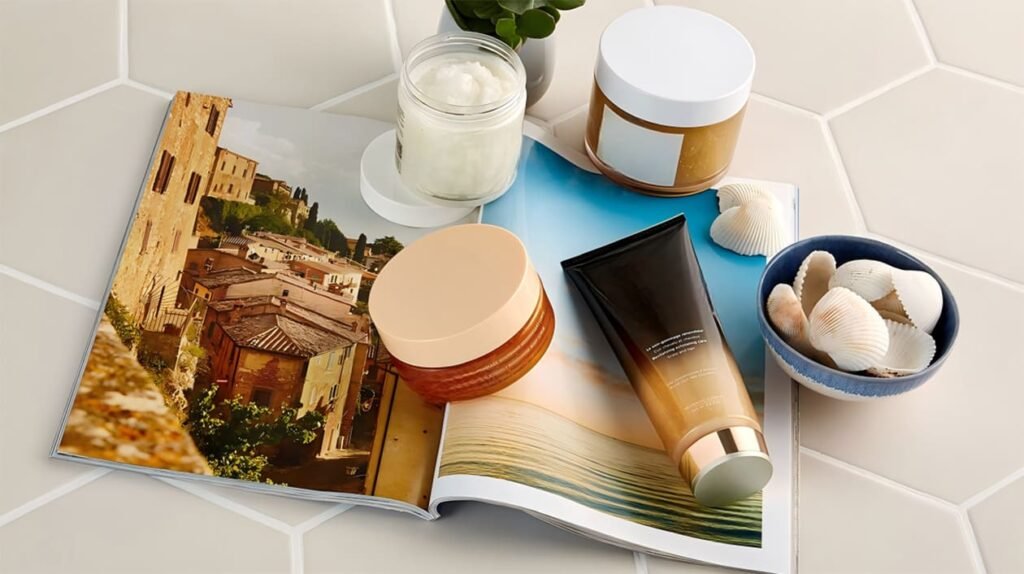
This question is common because sugar and salt feel very different, and people notice it immediately. Neither is universally better. The best choice depends on sensitivity, body area, and how often you exfoliate.
When is a sugar scrub usually the best choice?
Sugar scrubs often feel gentler because sugar can dissolve slightly as you use it, softening friction. That can make sugar a good match for dry skin, sensitive-leaning skin, and larger body areas like legs and arms.
Sugar is often the safer default if you’re not sure what your skin tolerates. It’s also easier to use lightly without feeling like you’re scraping. It still matters how often you use it—“gentle” can become irritating if you do it every day.
When does a salt scrub make more sense?
Salt scrubs can feel stronger. They’re often better reserved for thick skin areas like elbows, knees, and heels, or for people who love a more intense scrub feel.
Salt can sting if your skin is even slightly compromised: recent shaving, sun exposure, tiny nicks, or irritation from other products. If salt stings, don’t try to tough it out. It’s a clear signal your skin isn’t in the mood for it.
A small technique tip that helps: wet the skin for 30 seconds before using a salt scrub, and keep pressure light. Dry-scrubbing with salt is where regret starts.
What matters more than sugar vs salt?
Particle shape and base texture matter more than the label ingredient. A scrub with smooth, consistent particles and a cushiony base can feel gentle even if it exfoliates well. A scrub with irregular, sharp particles can irritate even if it sounds “natural.”
| Exfoliant | How it typically feels | Best use areas | Caution zones |
|---|---|---|---|
| Sugar | softer, more forgiving | legs, arms, overall body | very irritated skin days |
| Salt | stronger, can sting | elbows, knees, heels | post-shave, sensitive zones |
| Smooth powders or esters | can be very comfortable | sensitive-friendly polishing | depends on formulation quality |
What ingredients and formula details matter most in a body scrub?
A body scrub’s performance isn’t only about the exfoliant particle. It’s also about the base: how it spreads, how it rinses, and what it leaves behind. Two scrubs can exfoliate equally well and feel completely different on the skin afterward.
What should exfoliant particles feel like in a well-designed scrub?
A good body scrub particle feels consistent. It shouldn’t feel like random sharp bits. Consistency matters because skin doesn’t love surprises.
Well-designed physical exfoliants often feel smooth or rounded on contact, evenly distributed in the base, and effective with light pressure. If a scrub requires heavy pressure to feel effective, that’s usually a sign it doesn’t have enough slip—or the particle choice is too aggressive.
Should the scrub rinse “clean” or leave a soft film?
This is preference, but it’s also skin-type dependent.
Clean-rinsing scrubs often fit better for humid climates, oily or acne-prone body areas, and anyone who dislikes residue. Soft-film scrubs can be loved by dry skin types and anyone who wants immediate softness without adding lotion right away.
Neither is better across the board. The best body scrub is the one whose rinse behavior matches your comfort and your routine—because that’s what makes you actually keep using it.
How do fragrance and essential oils affect scrub tolerance?
Fragrance can make a scrub feel premium, but exfoliation temporarily increases sensitivity. That means fragrance that feels fine in a lotion may feel irritating in a scrub—especially after shaving.
If you’ve ever had a “my skin is itchy after scrubbing” moment, fragrance load is one of the most common reasons. You don’t have to go fragrance-free, but a lighter scent strategy is often easier for sensitive positioning and frequent-use routines.
How can you tell if a body scrub is too harsh?
A scrub is too harsh when the after-feel becomes the story. If you notice redness that lingers, a hot or stingy sensation when applying moisturizer, tightness that lasts into the next day, or new “irritation bumps,” it’s not a sign to scrub more—it’s a sign to back off.
The fastest correction is usually simple: reduce frequency, reduce pressure, and simplify what you pair with scrubbing days. Use warm water instead of hot, skip shaving right after exfoliation, and moisturize immediately. If your skin calms down within a week, you’ve confirmed the issue was routine stress, not a mysterious skin problem.
Here’s a quick checklist that helps reduce irritation risk when choosing a body scrub formula:
| Formula detail | Why it matters | Who benefits most |
|---|---|---|
| Rounded, consistent particles | Lower micro-irritation | Sensitive or reactive skin |
| Slip and cushion in base | Reduces friction | Dry skin, frequent exfoliators |
| Clean-rinsing design | Less residue and congestion | Oily/acne-prone body areas |
| Moderate fragrance strategy | Lower irritation risk | Shavers, sensitive zones |
| Balanced after-feel | Supports barrier comfort | Anyone who wants consistency |
How should you use a body scrub correctly so you don’t overdo it?
A scrub can be perfect on paper and still fail if you use it with the wrong technique. Most over-exfoliation happens because people think results come from pressure and time. In reality, results come from the right product, light pressure, and consistent routine support.
How often should you use a body scrub?
For most people, 1–2 times per week is enough. If you’re dealing with KP or ingrowns and your skin tolerates it, you might add chemical exfoliation support more frequently, but that doesn’t mean you should scrub physically every day.
If your skin feels tight, itchy, or stingy the next day, reduce frequency first. Frequency fixes more problems than switching products.
Should you scrub before or after shaving?
In general, avoid scrubbing right after shaving. That’s when the skin barrier is most compromised. Exfoliating immediately after shaving can irritate follicles and make bumps worse.
Better options:
- scrub the day before shaving
- exfoliate on non-shave days
- keep shave-day skincare gentle and fragrance-light
What technique gives the best results without irritation?
Use warm water, light pressure, and short contact time. Think 30–60 seconds per area, not five minutes of intense scrubbing.
A simple technique that works in real showers:
- wet the skin thoroughly
- apply scrub and massage lightly in small circles
- focus on rougher areas, be gentle on sensitive zones
- rinse completely
- moisturize immediately after, while skin is slightly damp
| Step | Do this | Why it helps |
|---|---|---|
| Prep | warm water + gentle cleanse | reduces friction and irritation |
| Scrub | light pressure, 30–60 seconds | polishes without stripping |
| Rinse | rinse thoroughly | prevents residue and irritation |
| Finish | moisturize on damp skin | locks in softness and comfort |
If you’re not sure whether you’re overdoing it, look for persistent redness, stinging when applying lotion, or tightness that lasts. Those are stress signals, not the goal.
Which body scrub formats and packaging are easiest to use consistently?
Format matters. The best body scrub is the one you’ll actually use consistently, without making your bathroom messy or turning into a complicated ritual.
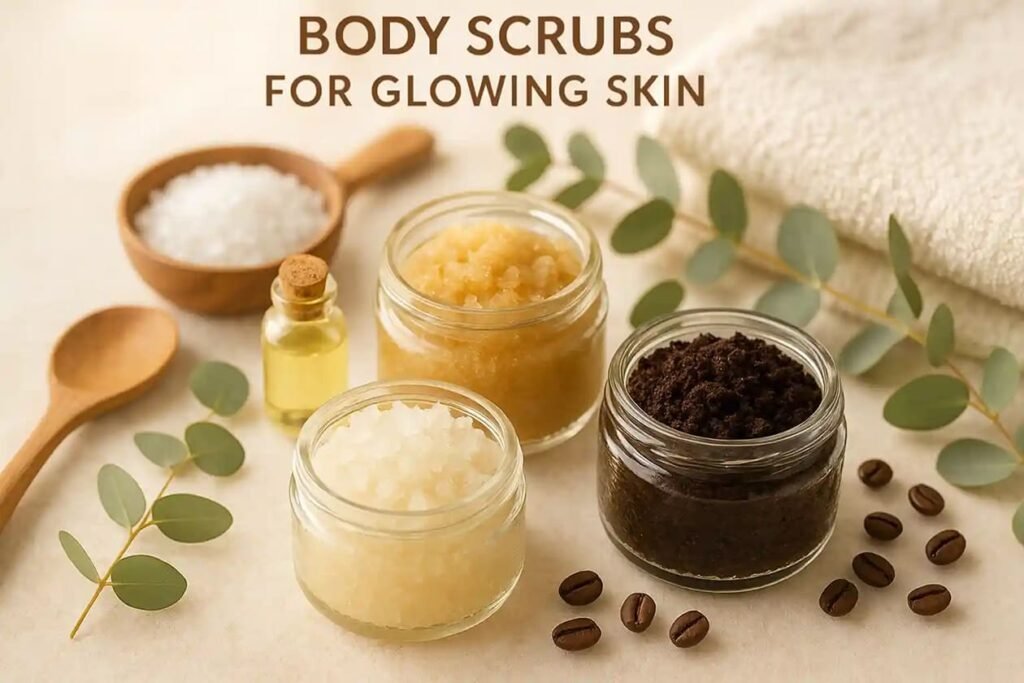
Are jar scrubs better than tube scrubs?
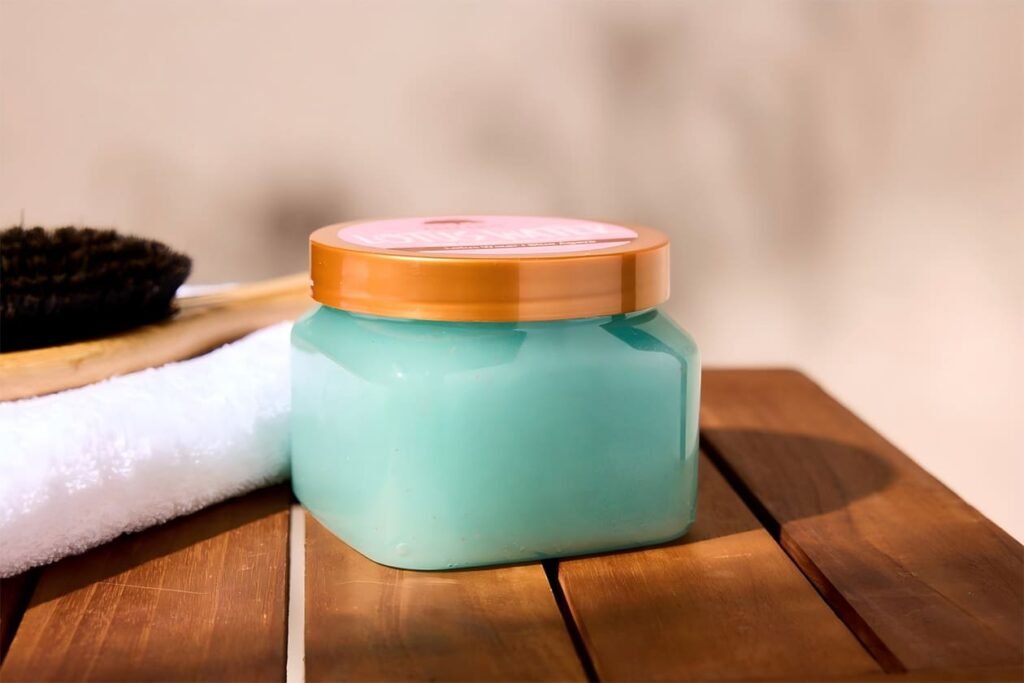
Jar scrubs can feel luxurious, but they can be messy and less hygienic in shared showers. Water can get into the jar, changing texture over time.
Tube scrubs are cleaner and easier to dose. If you travel, share a bathroom, or hate mess, tubes often win in real life—and that consistency can matter more than anything else.
Are body wash + scrub hybrids worth it?
For many people, yes. If you won’t remember a separate scrub day, a wash + scrub hybrid can keep exfoliation consistent. Just keep an eye on gentleness and frequency, because “easy to use” can become “too often” if the formula is intense.
Which textures feel best for different preferences?
Some people want spa soft and cushioned. Others want fresh and clean-rinsing. Others want strong polish for thick areas. Matching texture to preference matters because it controls repurchase behavior—if the texture annoys the user, the product won’t get finished.
| Format | Best for | Why it fits routines | Watch-outs |
|---|---|---|---|
| Jar scrub | self-care routines | rich feel and “spa moment” | messy, water contamination risk |
| Tube scrub | everyday practicality | clean dosing and travel-friendly | base quality matters for slip |
| Wash + scrub hybrid | busy routines | one-step consistency | can be too harsh if overused |
| Pouch refill | sustainability focus | cost and waste reduction | depends on consumer refill habits |
Conclusion
The best body scrub isn’t the harshest or the most dramatic. It’s the one that fits your skin type, your concern, and your routine. Physical scrubs deliver instant softness, chemical exfoliation supports steady texture improvement for issues like KP and ingrowns, and hybrid scrubs can offer both when used with restraint. The biggest scrub mistakes are simple: too much pressure, too much frequency, and scrubbing at the wrong time—especially right after shaving. Keep technique gentle, stick to 1–2 scrub sessions per week for most routines, rinse thoroughly, and moisturize right after while skin is still slightly damp. When exfoliation feels comfortable, you stay consistent, and that’s when smoother, more even-looking body skin becomes your default.
If you’re developing a body scrub for your brand—clean-rinsing gel scrub, rich sugar scrub, sensitive-skin option, or a wash + scrub hybrid—Zerun Cosmetic can support private label and custom development. To move fast, share your target market, your preferred rinse feel (clean-rinse or soft film), your packaging choice (tube, jar, refill), your scent direction, and a target cost range. Based on that, a clear formula direction, packaging plan, and sampling roadmap can be proposed for your private label body scrub project with Zerun.