Skip to content
Hair growth shampoos sell fast—until customers realize “growth” can mean five different things and your bottle can’t promise all of them at once. One buyer wants less shedding. Another wants thicker-looking roots. Another is battling a greasy, itchy scalp that makes hair look limp. If your product brief doesn’t separate those needs, your reviews will do it for you.
A hair growth shampoo that performs in the market usually isn’t a miracle potion. It’s a well-positioned, comfortable shampoo that improves scalp conditions and reduces breakage, so hair looks fuller and feels healthier over time. The strongest brands win by choosing one clear “growth-support” lane (scalp clarity, oil control, soothing, anti-breakage) and executing it with a formula people can use consistently. In this guide, you’ll learn how to define the right audience, design the formula system, keep claims safe, select packaging that fits real routines, and scale production without quality drift.
If you’re building a “hero shampoo” for a hair growth line, this is the map that keeps you out of the hype trap.
What does “hair growth shampoo” actually mean to buyers in 2026?
For most buyers, “hair growth shampoo” means a shampoo that makes hair look and feel fuller by improving scalp conditions and reducing breakage—not a guaranteed regrowth treatment. The best-selling lane is usually “growth-support” rather than “regrowth,” built around scalp cleanliness, oil balance, itch/flaking comfort, and stronger-feeling hair. Brands that define this clearly earn trust and repeat orders.
Why the word “growth” creates confusion
Customers read “hair growth” and imagine new hair appearing at the hairline. Then they use a shampoo for three weeks and feel disappointed—because shampoo is rinse-off and mostly supports the environment, not follicle biology in the way a drug product would.
A safer and more profitable approach is to frame your product as growth-support. That keeps expectations realistic and protects review quality. Customers will still buy it if they feel the immediate benefits: cleaner scalp, calmer itch, less greasy rebound, less snap and tangling.
The three “growth” outcomes people actually notice from shampoo
Most “this works!” feedback falls into three buckets:
Scalp feels lighter and cleaner
This creates better root lift. Hair looks less flat, which reads as “more hair.”
Less itching and scratching
When the scalp is calmer, users stop picking and irritating the skin, and their routine becomes consistent.
Less breakage
Better slip and less roughness means fewer strands snapping during towel-dry and brushing, which many users interpret as reduced “hair fall.”
None of these require risky medical claims. They require good formulation and honest positioning.
The quickest way to choose your lane: pick one primary promise
If you try to cover everything—oil control, dandruff, regrowth, thickening, scalp psoriasis, hormone balance—you end up sounding like a scammy listing.
Pick one primary promise and let the secondary benefits support it. Examples:
- “Growth-support for oily, buildup-prone scalp”
- “Growth-support for sensitive, itchy scalp”
- “Growth-support for thinning-looking hair and breakage”
When the promise is clear, everything downstream (actives, texture, packaging, usage directions) becomes easier.
This section should leave you with one clear takeaway: sell “growth-support” with a tight target user and a routine people can repeat, and you’ll earn better reviews than brands that promise regrowth.
Which customer problem are you solving: shedding, thinning, breakage, or scalp buildup?
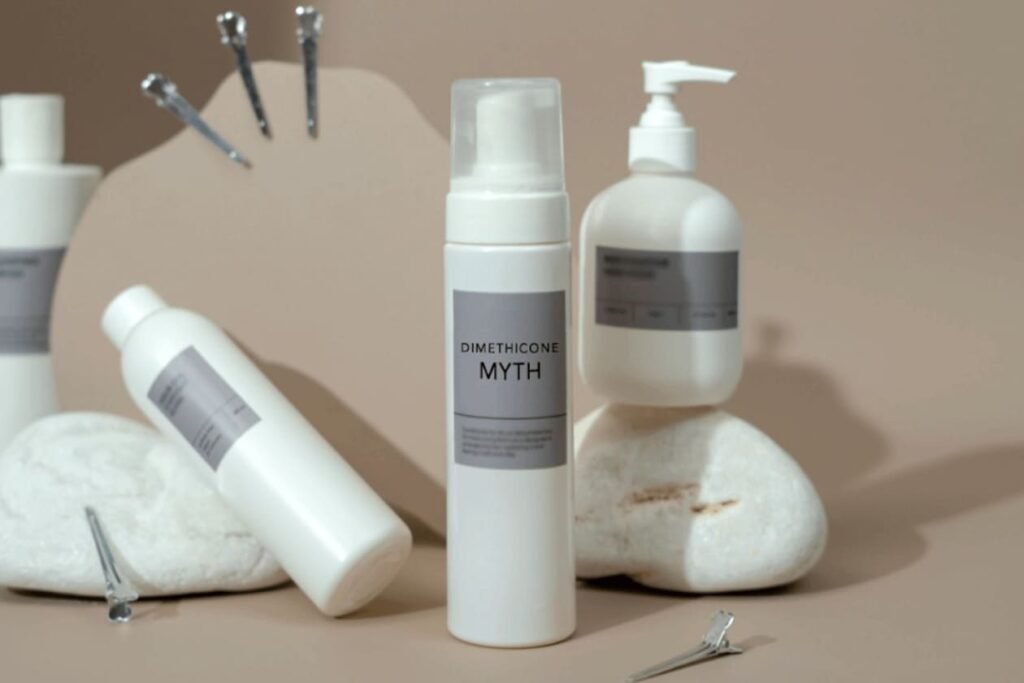
A winning hair growth shampoo brief starts with a single, specific user problem. Some customers mean shedding from the root, some mean breakage, and many mean “my scalp is oily and itchy so my hair looks thinner.” Shampoo helps most with scalp buildup, oil, irritation comfort, and breakage management. Brands should segment these needs and build a product role around the most realistic outcomes.
How to separate “shedding” from “breakage” in your brief
This is one of the most important clarifications you can make for a brand launch.
Breakage looks like shorter pieces, more tangling, rough ends, and hair snapping during brushing. A shampoo can help breakage a lot by improving slip, reducing friction, and preventing over-stripping.
Shedding looks like full-length strands, sometimes with a small bulb at the end, and a “more hair everywhere” feeling. Shampoo can support the scalp environment, but it won’t “switch off” shedding causes on its own.
If your audience is panicking about hair fall, a breakage-friendly shampoo that feels gentle and leaves hair easy to comb can immediately improve their perception of results.
What men and women often complain about differently
Many men complain about greasy roots, itch, and flat crown volume. Their “growth” desire is often “my hair looks thinner at the top.”
Many women complain about hair fall in the shower and brush, plus dryness on lengths from coloring and heat. Their “growth” desire is often “less shedding and stronger-feeling hair.”
You can serve both, but your formula and sensory decisions should match one primary reality, or your product becomes mediocre for everyone.
Here’s a quick way to keep your positioning clear when you write your brief.
| Audience problem | What they say | What shampoo can realistically do | What to avoid promising |
|---|---|---|---|
| Oily scalp + buildup | “My roots are greasy fast” | lift residue, improve root lift | “regrows hairline” |
| Itchy scalp + flakes | “I can’t stop scratching” | soothe feel, reduce buildup flakes | medical/disease treatment claims |
| Breakage + rough ends | “Hair snaps when I brush” | improve slip, reduce tangling | “stops shedding” |
| Thinning-looking crown | “My hair looks less dense” | reduce coating, boost lift, improve feel | guaranteed density increase |
| Postpartum/seasonal shedding | “Clumps in shower” | comfort, gentle cleansing habits | cure for shedding causes |
If you choose one row as your primary user story, it becomes much easier to write claims, build the formula stack, and design packaging that matches how people actually wash.
Which ingredients and formula systems are worth building around?
The best hair growth shampoos are built around a system, not a single “hero ingredient.” A strong system includes a balanced cleansing base, a slip/conditioning strategy to reduce breakage, and a focused active stack that supports your chosen lane (oil balance, scalp comfort, buildup lift, or thicker-looking hair feel). Choose ingredients that match rinse-off reality and stay within safe claim boundaries.
What “active stacks” tend to work best in rinse-off shampoos
In rinse-off, the winners are ingredients that influence feel and scalp environment quickly:
- Oil balance and comfort support (helps greasy + itchy scalp stories)
- Buildup-lifting support (helps coated scalp and flat roots)
- Soothing feel and barrier-friendly direction (helps sensitive scalp users keep using it)
- Slip/conditioning to reduce wet friction and breakage
You’ll notice what’s missing: anything that requires long contact time and a drug-like mechanism. Those belong in leave-on products, not a mainstream cosmetic shampoo.
Ingredient directions brands commonly choose
Caffeine is popular because it signals “energy” and “men’s hair” in marketing, and it’s easy to position as scalp-support. But caffeine alone won’t rescue a harsh base formula.
Niacinamide often performs well in messaging because it fits “calmer scalp” and “balanced feel” without sounding medicinal.
Zinc PCA fits oil control and scalp comfort positioning, which is extremely relevant because oily scalp is one of the biggest “my hair is thinning” triggers (appearance-wise).
Panthenol and conditioning polymers help hair feel smoother and less prone to snapping. Customers often interpret that as less hair fall.
Salicylic acid can be powerful in a “weekly reset” variant for oily buildup scalps. It should be framed as buildup control, not regrowth.
Here’s a simple system view you can share with product and marketing in one screenshot.
| System piece | What it does for the user | Common ingredients/directions | Common failure |
|---|---|---|---|
| Cleansing base | removes oil/residue | balanced surfactants | too stripping = rebound oil |
| Slip/anti-breakage | reduces tangling/snapping | lightweight conditioners | too heavy = coated roots |
| Scalp comfort | reduces itch/tight feel | calming directions | strong fragrance irritation |
| Oil/buildup control | helps lift at roots | zinc PCA, reset strategy | daily overuse of “reset” |
| Sensory & rinse | makes routine repeatable | clean rinse + soft feel | “squeaky clean” obsession |
If your system is balanced, your “growth-support” story becomes believable because customers feel the difference after wash two and wash three—not just the first rinse.

How do you design a hair growth shampoo that people will actually keep using?
Repeat use is the hidden KPI for hair growth shampoos. If the shampoo feels harsh, tangles hair, or makes the scalp tight, customers quit before any long-term “healthier hair” story can happen. The design goal is simple: clean scalp without tightness, manageable lengths without heavy residue, and an experience that fits real routines (gym, styling products, sensitive skin).
Why comfort beats “strength” in the hair growth category
Hair growth buyers are often anxious. They scrutinize shedding, scalp feel, and any sign of dryness. If your formula triggers tightness or sting, they assume it’s “damaging hair,” even when the problem is over-cleansing.
A comfortable shampoo lowers stress behaviors: scratching, over-washing, using harsh water temperature, and stacking multiple strong products. Comfort keeps the routine stable, which is where the best reviews come from.
The “daily + reset” structure that sells (and reduces complaints)
For many brands, the easiest line architecture is:
- Daily Growth-Support Shampoo: gentle, comfort-first, anti-breakage slip
- Weekly Scalp Reset Shampoo: buildup-lifting, clean rinse, used 1–2 times/week
This structure matches real routines. People who use wax/clay, sweat, or have oily scalp need a reset sometimes, but they don’t need it daily.
Routine guidance that prevents negative reviews (write it like a friend)
Most “this dried my hair” complaints come from using a reset shampoo daily, applying it to lengths, and skipping conditioner.
Your packaging and listing can calmly guide:
- apply to scalp, let foam rinse through lengths
- massage with fingertips, not nails
- rinse longer than you think
- conditioner on mid-lengths to ends, not scalp
- start 3–4 washes per week and adjust
If people use the product correctly, the formula gets a fair chance to do its job—and your review section looks healthier.
What claims are safe for a hair growth shampoo, and what crosses the line?
The safest lane for most brands is “growth-support” with cosmetic-friendly claims: healthier-looking hair, fuller-looking roots, reduced breakage, scalp comfort, and oil/buildup control. Claims that imply regrowth, treating hair loss, or changing follicle biology can trigger drug/medical classification depending on market. Brands should decide the claim lane early because it affects labeling, compliance, and retailer acceptance.
Cosmetic-friendly claim language that still converts
Here are claim directions that usually feel strong to buyers without stepping into high-risk territory:
- supports a healthy scalp environment
- helps reduce buildup that weighs hair down
- helps reduce breakage from brushing
- improves hair feel and manageability
- hair looks fuller at the roots with consistent use
- scalp feels cleaner and more comfortable
These still address what buyers want. They also align with what shampoo can realistically deliver.
Words that often create risk
Even if you don’t intend it, certain phrases can imply treatment:
- “regrow hair”
- “stops hair loss”
- “treats alopecia”
- “clinically proven to regrow follicles”
- “drug-level results”
If your brand needs the regrowth lane, you should build a separate product strategy with the right compliance pathway. Don’t try to “sneak it” into a cosmetic shampoo listing. It usually backfires.
Here’s a clean way to map marketing language to risk without killing conversion.
| Claim lane | Buyer appeal | Typical supporting proof | Risk level |
|---|---|---|---|
| Fuller-looking hair | high | consumer perception + usage guidance | low |
| Less breakage | high | combing/feel tests + positioning | low |
| Scalp comfort | high | mildness strategy + sensory validation | low |
| Oil/buildup control | high | rinse feel + routine results | low–medium |
| Regrowth/hair loss treatment | very high | market-specific compliance plan | high |
If your goal is mass retail or Amazon scale with fewer headaches, stay in the first four lanes and make the product feel genuinely good.
Which packaging, viscosity, and sensory choices fit DTC, Amazon, and salon channels?
Packaging and sensory details are not decoration; they shape usage behavior and review outcomes. For hair growth shampoos, the best packaging is easy to dispense in the shower, supports correct dosing, and reduces slippery-mess complaints. Viscosity should feel premium and controlled, not watery. Sensory choices (scent, cooling feel, foam profile) should match the target audience and avoid irritation triggers.
What packaging converts best for mainstream hair growth shampoos
For most brands, a straightforward bottle with a controlled flip-top or disc-top works well. Pumps can feel premium, but they’re sometimes awkward in wet environments and can increase cost.
If you’re selling a “daily + reset” duo, consider packaging that visually differentiates roles, so customers don’t accidentally use the reset daily. Many bad reviews come from confusion, not formula failure.
How viscosity affects perceived quality and usage
Watery formulas are often perceived as “cheap” unless the brand is clearly positioning a lightweight gel. On the other hand, overly thick formulas can feel hard to spread across the scalp, making users overuse product.
The sweet spot is controlled flow: easy to distribute on scalp, not running through fingers immediately, and rinses without residue.
Channel-specific notes that reduce friction
Amazon shoppers often punish leakage and messy caps. They also expect clear, simple directions and fast “feel” results.
DTC shoppers tolerate more education and love a routine story—especially a two-step system.
Salon channels often value performance feel, scent refinement, and consistent batch quality. They also care about how hair behaves during styling after wash.
Here’s a simple cheat sheet when you’re deciding packaging and sensory targets.
| Channel | What buyers care about most | Packaging priorities | Sensory priorities |
|---|---|---|---|
| Amazon | reviews + convenience | secure cap, leak resistance | clean rinse, no residue |
| DTC | story + routine | duo differentiation | premium scent, comfort feel |
| Salon | performance + consistency | professional look, easy use | slip, manageability, styling outcome |
If you build one formula and one packaging choice for all channels, you’ll usually disappoint at least one. It’s smarter to decide the primary channel first.
How do you sample, test, and scale a hair growth shampoo without quality drift?
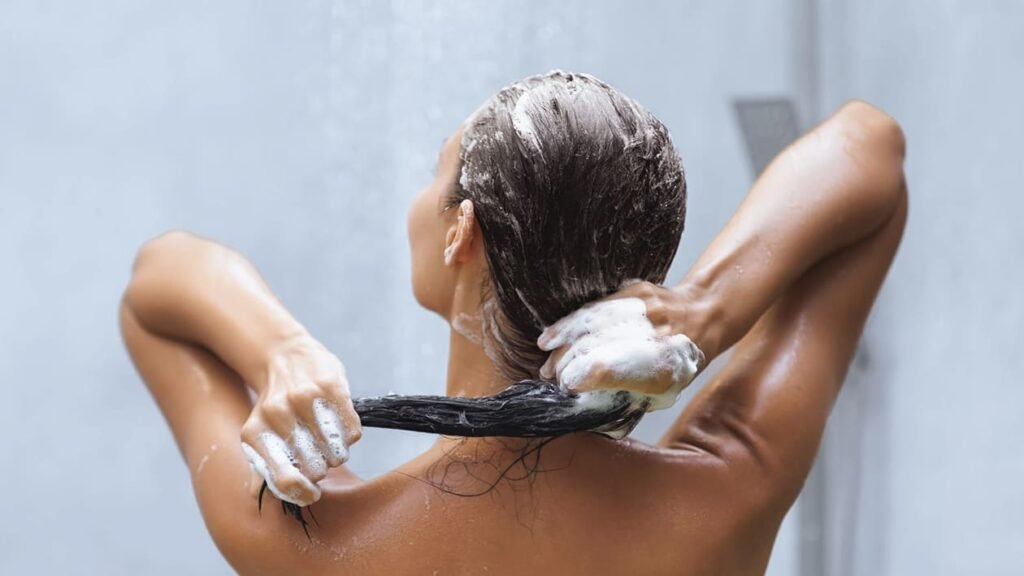
A hair growth shampoo succeeds when the approved sample is what customers keep receiving at scale. That requires disciplined raw material specs, stability planning, viscosity/foam targets, and batch release checks that protect sensorial consistency. Brands should plan sampling in steps (base feel, active stack, fragrance, packaging compatibility) and lock QC anchors early to avoid “sample loved, bulk different” problems.
Sampling workflow that prevents expensive loops
A practical sampling approach often looks like this:
First sample: base feel and rinse performance
Does it clean without tightness? Is hair manageable?
Second sample: active stack and scalp feel direction
Is the “growth-support” lane clear? Is comfort still good?
Third sample: fragrance and final sensorial tuning
Is it premium but not irritating? Does it fit the target audience?
Final sample: packaging compatibility + fill behavior
Does it dispense cleanly? Any clogging, leaking, or label issues?
This step-by-step approach is faster than changing everything at once.
The QC anchors that protect your reviews
Hair growth shampoos are judged heavily on:
- fragrance consistency
- viscosity and flow
- foam/rinse feel
- post-dry hair feel (rough vs smooth)
- scalp comfort the next day
If any of these drift between batches, your reviews drift too. A tight spec sheet and batch release checks matter more than fancy marketing.
Here’s a basic planning grid most brands can use without overcomplicating it.
| QC anchor | Why it matters | What to lock early (copy-ready) |
|---|---|---|
| Viscosity (25°C) | Controls dosing, premium feel, and dispensing | Target range; test method (e.g., Brookfield spindle/speed); acceptance window across 20–30°C |
| pH (25°C) | Impacts scalp comfort, preservative performance, and stability | Target range; adjustment agent; recheck timing (e.g., after 24 hours) |
| Appearance | Prevents “batch looks different” complaints | Color window; clarity/haze limit; no sediment; no phase separation |
| Odor / Fragrance | Keeps brand identity consistent and lowers irritation risk | Reference standard; intensity window; IFRA-aligned fragrance and dosage |
| Foam and rinse feel | Drives repeat use and review tone | Foam profile target; rinse time target; after-feel target (clean, not tight) |
| Key active marker (if used) | Confirms “same formula” batch to batch | Raw material spec for the key active; incoming QC check item; optional assay plan |
| Micro limits | Safety and shelf-life credibility | Total count limits; yeast/mold limits; preservative efficacy test plan |
| Packaging seal and torque | Reduces leakage and returns | Cap torque range; liner type; leak test pass criteria (upright and inverted) |
| Net content control | Compliance and cost control | Fill weight/volume tolerance; sampling frequency; scale calibration rule |
If your bulk feels the same as your sample, everything gets easier: fewer complaints, fewer returns, and better reorder rhythm.

How can Zerun Cosmetic support your hair growth shampoo from brief to reorder?
Zerun Cosmetic supports private label and custom hair growth shampoo projects with a practical, manufacturing-ready approach: clarifying the growth-support lane, designing a balanced formula system, tuning sensory and viscosity for repeat use, recommending packaging that fits your channel, and locking QC targets so the approved sample stays consistent in production. You get a clearer path from concept to samples to stable reorders, without overpromising or chasing risky claims.
We start from your buyer reality
We’ll help you define:
- who the shampoo is for (oily scalp, sensitive scalp, breakage, flakes)
- what “growth” means in your positioning
- what your channel constraints are (Amazon leakage risk, salon expectations, DTC story)
We co-develop formulas, textures, and routine roles
We can develop:
- a daily growth-support shampoo that stays comfortable
- an optional weekly scalp reset shampoo for buildup control
- scent and after-feel directions that match your brand style
We help plan claims, tests, and documentation
We support:
- cosmetic-friendly claim language planning
- stability, micro, and compatibility planning as needed
- batch-to-batch QC anchors so production matches samples
If you already have references, share them
If you have:
- competitor reference products
- target viscosity and scent direction
- target customer complaints you want to solve Send them over. It speeds up sampling and reduces iterations.
If you want this to convert, keep the brief simple, pick one growth-support lane, and build a formula people can live with—then scale it without drift.
Conclusion
A hair growth shampoo that sells long-term is usually not the loudest bottle on the shelf. It’s the one that matches a real customer problem, feels comfortable enough for consistent use, and delivers visible “fuller hair” perception through scalp cleanliness, calm feel, and less breakage. Start by choosing your lane—oily buildup, itchy scalp comfort, or anti-breakage manageability—then build a formula system that supports it: balanced cleansing, clean rinse, and smart slip. Keep claims realistic and cosmetic-friendly, and use packaging and routine guidance to prevent misuse. Finally, lock measurable QC anchors so the bulk product stays as good as the sample. If you want to develop a private label hair growth shampoo (daily plus optional reset) with stable production quality and a clear market-ready positioning, contact Zerun Cosmetic to start your custom formulation and sampling plan.