Skip to content
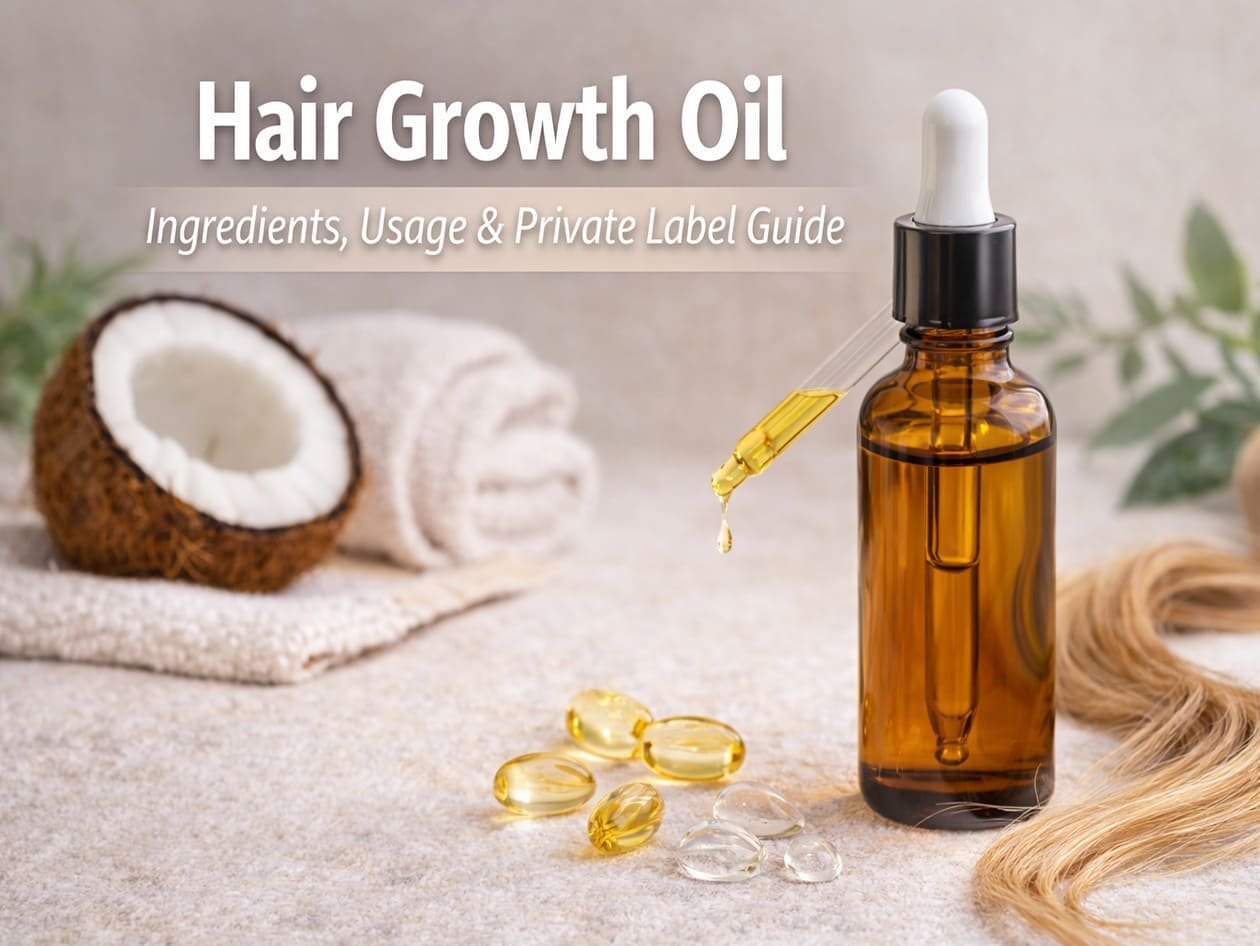
You don’t wake up one morning and suddenly “have hair loss.” It usually creeps in. More strands on the bathroom floor. A thinner ponytail. A part line that looks wider in photos. Or a scalp that feels oily, itchy, and sensitive at the same time. That’s why hair growth oil is such a popular category: it feels like a simple, comforting step you can control at home.
Here’s the honest truth: a hair growth oil works best when it plays the right role. It can support a healthier scalp environment, reduce breakage (so hair looks fuller), improve softness and shine, and help the hairline area look less stressed over time. What it usually can’t do (as a cosmetic) is guarantee medical regrowth for hormonally driven hair loss. The products that win long-term are the ones people can use consistently—because they feel good, don’t irritate, and don’t leave roots greasy.
This guide walks through realistic results, ingredient choices that make sense, how to use hair growth oil correctly, how brands should talk about claims safely, and how to plan packaging and validation so the product performs in the real world—and holds up after launch.
What is hair growth oil, and what results are realistic?
Hair growth oil is typically a leave-on scalp and hair treatment designed to improve the “conditions” that help hair look healthier: scalp comfort, reduced friction, reduced breakage, and better hair fiber conditioning. Realistic outcomes include a calmer scalp feel, less snapping during brushing, smoother ends, and a fuller-looking appearance because hair breaks less and looks healthier at the root. If someone has significant or sudden shedding, they should also consider medical or lifestyle causes, because oil alone won’t solve everything.
Shedding vs breakage: why this changes expectations fast
Many people say “hair fall” when they’re actually dealing with breakage: short snapped pieces, frayed ends, and tangles that turn into shedding during combing. Oils often help a lot here because they reduce friction and improve slip.
Shedding from the root (full strands, sometimes with a tiny bulb) is different. A hair growth oil can still support scalp comfort, but it should not be marketed as a guaranteed solution for underlying causes like hormones, postpartum changes, thyroid issues, or scalp conditions that need diagnosis.
A believable timeline that matches how hair works
A practical timeline brands can communicate without overpromising:
- Week 1–2: scalp comfort, less tightness/itch, easier detangling, softer lengths
- Weeks 3–8: reduced breakage, improved hair feel, more consistent scalp “balance”
- Weeks 8–12+: stronger “fullness look” mainly from breakage control and improved scalp condition (results vary)
If a product only talks about “growth,” it sets itself up for disappointment. If it delivers early wins (comfort and breakage control) and supports longer-term routine use, it earns repeat buyers.
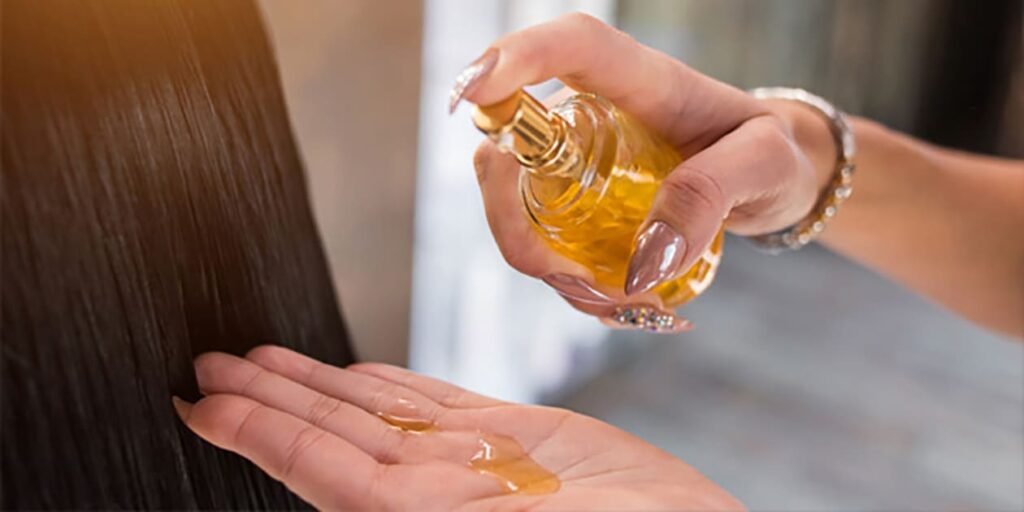
Which ingredients matter most in a hair growth oil?
The smartest ingredient strategy is scalp comfort + hair fiber protection + a stable, elegant base. In oil formats, the base system matters as much as the “hero ingredient” because the base decides whether people keep using it. If it feels heavy, smells off after a month, or irritates sensitive scalps, the marketing story won’t save it.
Start with the base: the feel comes first
Base oils decide spread, absorption, and whether fine hair users complain about greasy roots. Modern hair growth oils often combine lighter emollients for dry-touch with a balanced oil phase that still feels nourishing.
Common base directions (simplified):
- Lightweight: dry-touch esters, faster-spreading emollients, “silky” oil-feel systems
- Balanced: jojoba-style, argan-style, grapeseed-style directions
- Heavy: castor-style directions (high weight, high residue risk)
For mass-market and Amazon-like environments, “clean finish” usually wins. For thick/curly/textured hair, a richer feel can work—if you guide usage and dose.
Scalp-support ingredients that fit cosmetic positioning
In an oil format, you typically want oil-compatible soothing and antioxidant directions that support comfort and stability.
Common, practical directions:
- Soothing/comfort support (low irritation positioning)
- Antioxidant support to help reduce oxidation and keep the oil smelling fresh
- Botanical storytelling that is used carefully (because too much botanical/essential oil can trigger irritation)
Essential oils can be attractive for branding, but they raise complaint risk quickly. If you want a product that can scale across sensitive users and repeat purchases, a fragrance-free or low-allergen version is often a strong long-term play.
A practical ingredient blueprint
| Product goal | Base direction | Supporting ingredients | What to watch out for |
|---|---|---|---|
| Lightweight daily scalp oil | dry-touch base oils | antioxidant support, soothing feel | strong fragrance → itch complaints |
| Night scalp massage oil | balanced base | botanical story + antioxidant | too heavy for fine hair |
| Breakage-focused lengths oil | mid-weight slip oils | cuticle-smoothing emollients | greasy feel if overdosed |
| Sensitive scalp oil | minimalist, low-odor base | comfort-first system | essential oils can ruin tolerance |
| Premium “spa” oil | elegant base + signature scent | antioxidant blend | oxidation/odor drift over time |
How to think about a hair growth oil formula in layers
A great hair growth oil is rarely “one hero ingredient.” It’s a layered system: the base decides feel and spread, the sensory layer controls greasiness, the functional layer supports scalp comfort, and the protection layer keeps the oil from smelling off over time.
| Formula layer | What it does in the product | Common choices | Typical failure points to avoid |
|---|---|---|---|
| Base oils | Sets slip, spread, absorption speed | jojoba/argan/grapeseed directions | too heavy for fine hair; inconsistent odor |
| Sensory modifiers | Reduces greasy feel, improves dry-touch | dry-touch esters, lightweight emollients | “too dry” feel; dispenser mismatch |
| Functional (oil-compatible) | Supports scalp comfort and healthier look | soothing + scalp-conditioning directions | irritation if pushed too hard |
| Antioxidant/protection | Helps prevent oxidation and odor drift | vitamin E direction, stable blends | “off smell” after heat exposure |
| Fragrance/essential oils (optional) | Scent identity and experience | mild signature scent, low EO | itching, bumps, allergen labeling needs |
| Preservative strategy (when needed) | Only if not a pure oil format | depends on hybrid design | ignoring micro risk in non-pure-oil formats |
Practical brand rule: if you want daily use and low complaint risk, keep the formula “light, calm, and stable” first—then build the story on top of that.
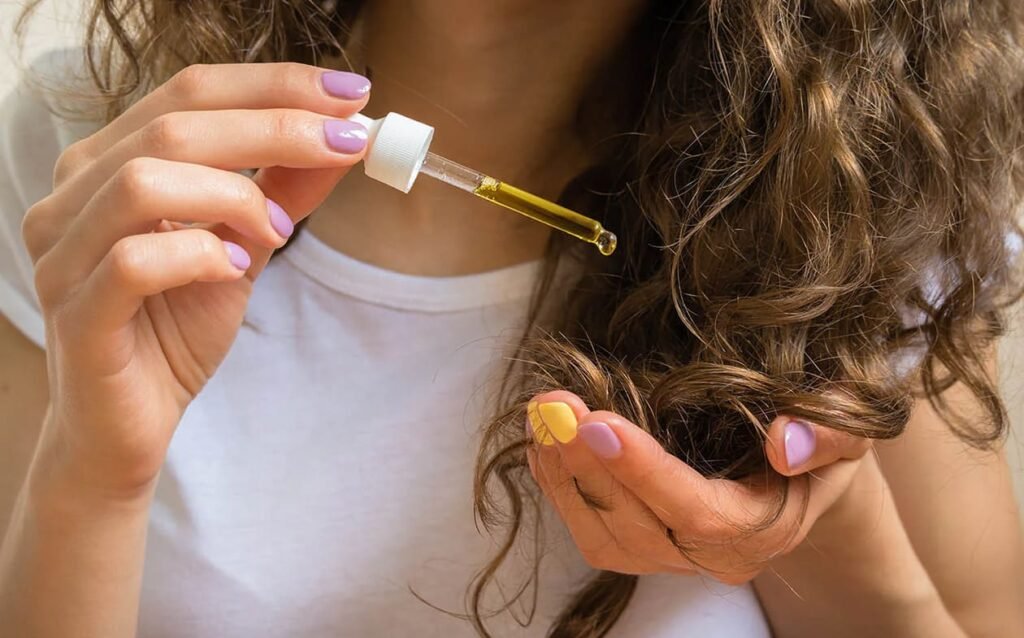
How should people use hair growth oil for best results?
Better results usually come from smaller doses, correct placement, and a schedule people can repeat without getting greasy roots or irritation. Most bad reviews happen because users apply too much, apply on an irritated scalp, or expect visible “new growth” in days.
How much should you apply?
A simple dosing guide:
- Fine hair / oily scalp: 2–4 drops total on scalp sections
- Medium hair: 4–8 drops total
- Thick/curly/textured hair: 6–12 drops in sections
If roots look slick the next morning, it’s too much. You want a light film, not an oil layer.
Where should it go: scalp, lengths, or both?
For “hair growth oil” positioning, the main focus is usually the scalp. But many products win more reviews when brands teach dual use:
- Scalp: small amount, targeted zones, gentle massage
- Lengths/ends: tiny amount to reduce breakage and frizz
That way, customers feel something right away on the lengths (softness, less snap) even while scalp benefits take longer.
How often should people use it?
A schedule most people can actually stick to:
- Scalp oiling: every other night, or 3–5 nights per week
- If users hate leave-on feel: apply 30–60 minutes before shampoo on wash days
- Lengths oil: after wash or before heat styling (very small amount)
Consistency matters more than intensity.
How to adjust use by scalp and hair type
For fine hair or oily scalp
- 2–4 drops total on targeted zones, 3 nights/week
- Prefer lighter, dry-touch feel; avoid heavy castor-style systems
- If roots look slick, cut dose in half
For dry scalp or flaky feel
- 4–8 drops, gentle massage, 4–6 nights/week
- Focus on comfort and a mild scent profile
- If itch increases, reduce fragrance/essential oils and simplify
For thick, curly, or textured hair
- 6–12 drops in sections, 3–5 nights/week
- Add 1–2 drops to lengths/ends after wash for breakage reduction
- If buildup happens, switch to pre-shampoo use 1–2×/week
For sensitive scalp
- Start 2 nights/week for 10–14 days, then increase if comfortable
- Choose fragrance-free or very low-scent options; patch test
- Persistent burning/itching is a stop signal—don’t “push through”
Common mistakes that trigger returns
| Complaint | Most likely cause | Fix that works fast |
|---|---|---|
| Greasy roots | too much oil / heavy base for hair type | lower dose, lighter base direction |
| Itchy scalp | fragrance/EO too strong | fragrance-free option, reduce frequency |
| “Did nothing” | inconsistent use / unrealistic timeline | set a timeline, focus on breakage wins |
| Scalp bumps | buildup + poor rinse routine | clarify wash routine, reduce heaviness |
| Strong smell later | oxidation/odor drift | better antioxidant + packaging strategy |
A good hair growth oil should be easy to use correctly. The more “foolproof” the routine, the better the repeat purchase rate.
How should brands position hair growth oil claims without overpromising?
This category is high-demand and high-scrutiny. The quickest way to damage a launch is to promise guaranteed regrowth or “treat hair loss” without the correct regulatory and substantiation strategy. A safer, long-lasting approach is to focus claims on scalp comfort, breakage reduction, and the appearance of fuller-looking hair—supported by a clear routine and realistic timelines.
Safer claim directions that still sell
Common cosmetic-friendly claim directions:
- helps reduce hair breakage
- supports scalp comfort and balance
- helps hair look fuller and healthier
- improves smoothness and shine
- helps reduce the appearance of thinning caused by breakage
These claims match what users feel early, which protects reviews.
What to avoid unless you have a specific regulatory plan
Be cautious with:
- “Regrows hair” or “guaranteed new hair growth”
- “Treats hair loss” as a medical promise
- disease/scalp condition treatment language
- drug comparisons
You can still be persuasive without crossing lines. The strongest copy often sounds simpler and more believable.
Claim-to-evidence planning
| Claim direction | What to support | Why it matters |
|---|---|---|
| Breakage reduction | combing/breakage assessments or user feedback | fast satisfaction and better reviews |
| Scalp comfort | tolerance/usage testing | prevents itch and bump complaints |
| Fuller-looking hair | perception panel + consistent routine guidance | supports positioning without overclaim |
| Shine and smoothness | sensory + basic measurements | immediate “it works” feeling |
| Routine support | stability + consistency | keeps repeat orders stable |
If you want stronger “growth” wording, treat it as a substantiation and compliance project—not just a marketing choice.
Packaging and channel fit: what wins in DTC, Amazon, and salon lanes?
Hair oils are judged by feel and convenience, but packaging quietly decides whether you get leakage returns, overdosing complaints, and messy routines. A great formula can lose if the dropper leaks in transit or dispenses too much at once.
Choosing formats that match how people actually apply oil
- Dropper: precise scalp dosing, premium feel, great for targeted use
- Restrictor cap: simple, controlled flow, often lower leakage risk when designed well
- Pump: fast, clean, good for daily routines if the viscosity matches the pump
- Roll-on: targeted edges/hairline, convenient, but needs hygiene and premium planning
A packaging selection table brands can use
| Format | Best for | Pros | Watch-outs |
|---|---|---|---|
| Dropper bottle | scalp-focused hair growth oil | precise dosing, premium feel | leakage risk if cap/liner is weak |
| Restrictor cap bottle | mass-market | controlled flow, simpler | less “luxury” perception |
| Pump bottle | fast routines | clean, easy | pump compatibility with thin oils |
| Roll-on | edges/hairline | targeted, convenient | hygiene perception, premium limits |
If you plan to sell in fast-review environments, leakage resistance and dosing control are not optional—they are part of performance.

Private label hair growth oil: what can be customized, and what drives cost?
Brands can launch fast with private label bases (existing formula + your branding), or build differentiation through custom development (texture feel, fragrance identity, active story, packaging upgrades, and a tighter evidence plan). Cost is usually driven by the complexity of the active system, fragrance/essential oil strategy, premium packaging, testing depth, and how many variants you want at launch.
Private label vs custom: a simple decision rule
Choose private label when you need speed, a proven stability baseline, and a lower-risk starting point. Choose custom when you need a signature sensory identity, a focused “hero story,” or a premium positioning that depends on feel and packaging.
Many brands start with a stable base and customize safely: packaging, scent direction (or fragrance-free), viscosity feel, and a focused active twist.
What brands should validate before launch (so claims, stability, and shipping don’t break the product)
Hair oils get returned for three reasons: customers hate the feel, the scalp reacts, or the product leaks/smells off after a few weeks. A solid validation plan doesn’t need to be complicated—but it must cover stability, packaging compatibility, tolerance, and basic performance perception.
| What to validate | Why it matters | Typical pass signals | Where brands get surprised |
|---|---|---|---|
| Elevated temp stability | oils oxidize faster under heat | no sharp odor change, stable appearance | “off smell” after warm shipping/storage |
| Freeze–thaw resilience | prevents drift across climates | consistent appearance and flow | cloudiness/crystallization in some blends |
| Physical stress (for hybrids) | predicts separation risk | no phase split | late-stage separation after botanicals |
| Packaging compatibility | prevents leaching/pump failure | stable dispense, no softening | dropper mismatch, discoloration |
| Leakage resistance | reduces refunds | cap stays tight, no seepage | torque/liner not standardized |
| Tolerance / usage test | supports “scalp comfort” | low irritation feedback | essential oils too strong |
| Perception panel | supports “fuller-looking” story | better detangling, nicer finish | overclaiming “growth” vs feel benefits |
A brief checklist
| Brief item | Why it matters | Example |
|---|---|---|
| Target market & channel | defines texture + packaging | US DTC vs Amazon vs salon |
| Hair types | sets finish expectations | fine/oily vs thick/dry |
| Scalp sensitivity | defines fragrance strategy | fragrance-free or low-allergen |
| Hero story | keeps formula focused | breakage + scalp comfort |
| Packaging choice | controls dose + leakage risk | dropper with restrictor |
| Claim scope | shapes validation plan | appearance + breakage focus |
Conclusion
Hair growth oil works best when it’s positioned for what it can reliably deliver: a healthier-feeling scalp, less breakage, and hair that looks smoother, shinier, and fuller over time. The products that win aren’t the ones with the loudest promises—they’re the ones people can use consistently without greasy roots or irritation. For brands, the biggest success drivers are a base that matches real hair types, a stable antioxidant strategy that prevents odor drift, packaging that controls dosing and reduces leakage, and claims that stay believable. If you build the routine and the sensory experience first, the ingredient story becomes more convincing—and reviews get much easier to earn.
If you’re developing a private label or custom hair growth oil, Zerun Cosmetic can support you from base selection and active stack design to packaging choices, stability planning, and production readiness. Share your target market, channel, desired finish, packaging preference, and claim direction, and we’ll propose a clear sampling plan and development roadmap for your launch.