Skip to content
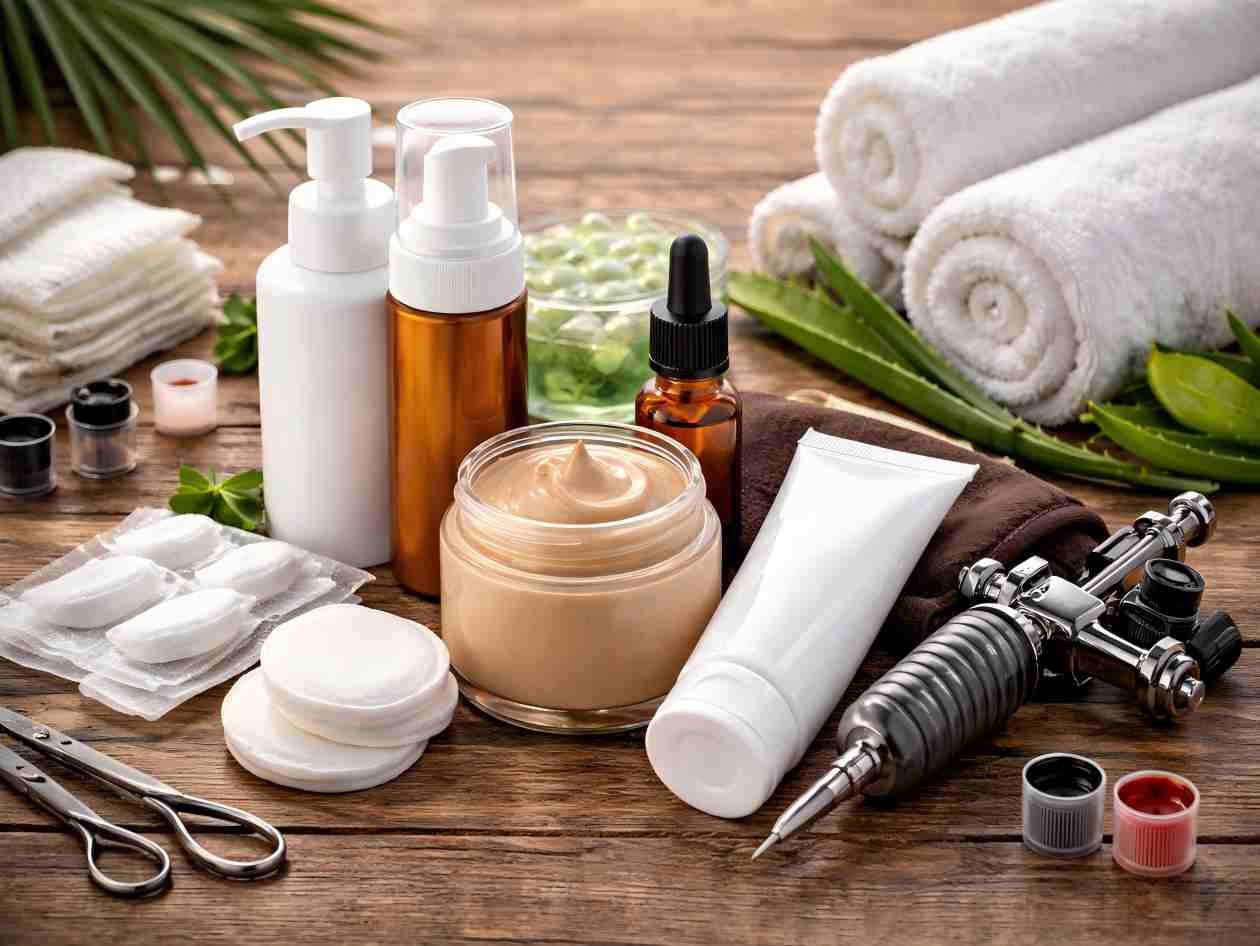
Most tattoo “healing problems” don’t come from one dramatic mistake—they come from small, everyday choices that add up. Too much ointment. Not enough washing. Scratching a little “just this once.” A sweaty workout a day too early. Sun on fresh ink because your sleeve rode up. Tattoo recovery is less like a single moment and more like a short relationship with your skin: keep it calm, clean, and comfortably moisturized, and it usually behaves.
The tattoo recovery process is your skin rebuilding its protective barrier after controlled micro-injury from the needles. In the first few days, the tattoo can ooze and feel warm; then it dries, flakes, and may itch; finally the surface looks “healed” while deeper layers continue to settle for weeks. Many tattoos look presentable in 10–14 days, but full recovery commonly takes 3–6 weeks depending on placement, size, technique, and how well you manage washing, moisture, friction, sweat, and sun exposure.
If you’ve ever stared at a peeling tattoo and wondered, “Is this normal or am I ruining it?”—this guide is for you.
What is the tattoo recovery process, and how long does it usually take?
Tattoo recovery is the skin’s staged repair process: first it seals the area and controls fluid loss, then it sheds damaged surface cells, and finally it strengthens the barrier and stabilizes pigment appearance. Many tattoos look “healed” on the surface in about 10–14 days, but deeper recovery often continues for several weeks. Healing speed depends on placement, ink density, aftercare consistency, and irritation from friction, sweat, and sun.
What is healing actually doing under the ink?
Healing is your skin closing thousands of microscopic channels and rebuilding a barrier that can hold moisture again. The tattoo sits in the dermis, but most of what you see day to day is the epidermis restoring itself. Early on, your body reduces fluid loss and protects the area; later, it sheds compromised surface cells; after that, it settles inflammation so the tattoo looks clearer and more even.
Practical takeaway: if the surface looks “done,” you still treat it gently for a bit—because the calm, durable barrier comes later.
Why can a tattoo look healed before it really is?
A tattoo can look healed on top while deeper layers are still recovering, which is why “it looks fine” isn’t always the same as “it’s fully recovered.” The surface may stop flaking while the skin barrier is still delicate, so long soaks, heavy friction, or harsh products can still irritate it. This is also why tattoos can look slightly dull or cloudy before they “snap” back to crispness.
A helpful mindset: judge recovery by comfort and trend, not by how “pretty” it looks on one random day.
Which day-by-day timeline should you expect for most tattoos?
Most tattoos move through a predictable pattern: weeping and warmth early, flaking and itching mid-week, then gradual settling over the following weeks. Use this as a realistic reference—placement and saturation can shift the timeline.
| Time window | What you may see/feel | What it usually means | What to do | What to avoid |
|---|---|---|---|---|
| First day | Redness, warmth, mild swelling, plasma/ink weeping | Fresh wound response | Keep clean, protect from friction, follow artist wrap guidance | Touching with unwashed hands, heavy layers of thick ointment |
| Days 2–3 | Less weeping, tenderness, tightness | Sealing phase | Wash gently, apply a thin layer if tight | Soaking, sweaty workouts, pets rubbing |
| Days 4–7 | Flaking, light scabbing, itchiness | Surface shedding | Moisturize lightly, let flakes fall naturally | Picking, scratching, hot baths |
| Days 8–14 | Peeling tapers, tattoo looks uneven/dull at times | Barrier rebuilding | Keep routine steady, keep out of sun | Exfoliating acids, swimming, direct sun |
| Weeks 3–6 | Surface looks normal, occasional dryness or mild shine | Deeper settling | Moisturize as needed, protect from sun | Sunburn, aggressive scrubbing, harsh products |
Which factors make tattoos heal slower or faster?
Healing speed is driven by friction, movement, skin type, and how “worked” the tattoo is. Elbows, knees, ankles, hands, ribs, inner thighs, and waistband zones heal slower because they move and rub constantly. Dense blackwork, heavy shading, and large pieces create more skin stress. Very dry, eczema-prone, or acne-prone skin often needs gentler product choices and lighter layers.
Quick “risk of irritation” check:
- High friction + high movement = slower heal
- Heavy shading + long session = slower heal
- Tight clothing + sweat = higher irritation risk
How can you tell the recovery is on track?
Recovery is on track when symptoms trend calmer over time, even if peeling looks dramatic in the middle. Redness should gradually shrink, tenderness should slowly decrease, and the tattoo should feel less “hot” day by day. The skin can look messy while it sheds—but it shouldn’t look increasingly angry, swollen, or painful.
“Trend tracker” (use once a day):
- Redness: shrinking / same / expanding
- Heat: less / same / more
- Pain: less / same / more
- Swelling: less / same / more
- Discharge: none / light clear / thick yellow-green
- Mood: feel fine / feel unwell
If the “more” column keeps winning, stop experimenting and get help.
What should you do in the first 24–48 hours of tattoo recovery?
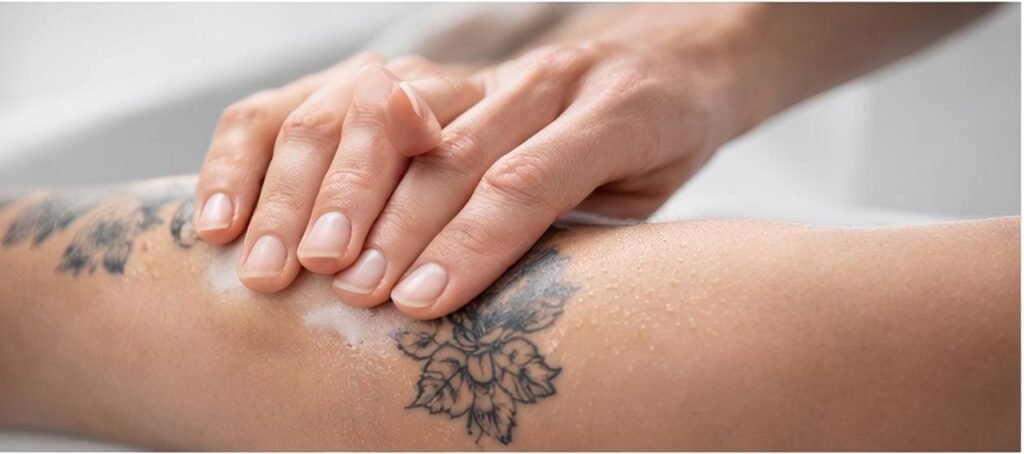
In the first 24–48 hours, your main goals are to keep the tattoo clean, reduce friction, and avoid trapping too much moisture under thick products. Wash gently with clean hands, lukewarm water, and a mild cleanser; pat dry; then apply a very thin layer of appropriate moisturizer or aftercare balm if needed. Avoid soaking, sweating heavily, tight clothing, and unnecessary touching.
What should you do with the wrap or film in the first day?
The wrap or film should protect the tattoo from friction and dirt—not create a warm, wet environment for too long. Follow your artist’s timeline if you were given one. If you’re using a film, it should stay sealed and smooth; if it becomes loose, dirty, or full of trapped fluid, it’s no longer “protecting,” it’s just trapping.
Quick wrap rules most people can follow:
- Keep it clean and sealed
- Don’t rewrap casually with random plastic
- If something feels off (tight, itchy, burning, leaking badly), address it cleanly rather than ignoring it
How should you wash a fresh tattoo the first time?
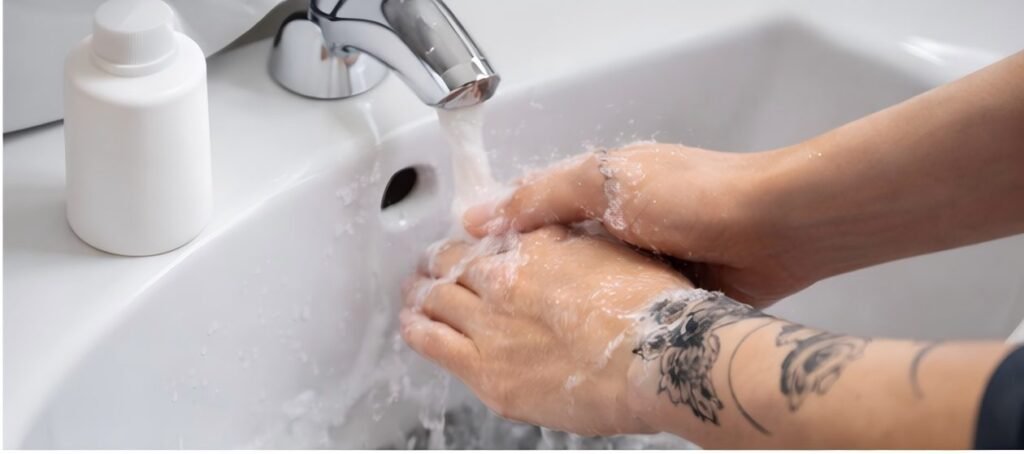
The first wash should be gentle, thorough, and short—no scrubbing and no tools. Wash your hands, use lukewarm water, and clean with fingertips using a mild cleanser. Rinse well and pat dry with a clean paper towel or a towel reserved for this purpose. A small amount of color in the rinse early on can be normal; don’t chase “perfect clarity” with force.
First-wash steps:
- Wash hands
- Lukewarm water
- Mild cleanser
- Fingertips only
- Rinse thoroughly
- Pat dry
- Air-dry a few minutes
How much aftercare product is too much in the first 48 hours?
If the tattoo looks glossy-wet for hours or feels greasy under clothing, it’s usually too much product. A thin layer should reduce tightness, not create a slick coating. In the first two days, heavy occlusion is a common reason tattoos feel itchy, clogged, or irritated later.
The “too much” signs:
- It looks shiny like lip gloss
- It smears onto clothing hours later
- The skin feels soggy under the layer
- You’re reapplying because it feels sticky, not because it feels tight
Which clothing choices reduce friction and irritation?
Loose, breathable clothing is one of the simplest healing upgrades you can make. Choose fabrics and fits that don’t rub seams across the tattoo. If your tattoo sits under waistbands, bra lines, sock edges, or uniform friction points, plan outfits around comfort for a few days—your tattoo will reward you.
Easy swaps that reduce problems:
- Loose cotton vs tight synthetic
- No seam directly over the tattoo
- Avoid compression gear early on
- Keep the area cool if possible
When should you contact your artist in the first two days?
Contact your artist if something feels unusually intense or gets worse quickly rather than calming down. Rapidly increasing pain, heavy swelling that doesn’t settle, wrap issues you can’t manage cleanly, or any signs that worry you are valid reasons to ask. When in doubt, it’s better to ask early than to “wait it out” while irritation grows.
How should you clean and moisturize a healing tattoo without overdoing it?
Clean a healing tattoo with a mild cleanser and lukewarm water one to two times daily (more if it gets dirty), then pat dry and apply a thin layer of moisturizer or aftercare balm to prevent cracking and excessive itch. The goal is “clean and comfortably hydrated,” not greasy or constantly wet. Too much product can clog and irritate; too little can cause tightness and rough peeling.
How often should you wash a healing tattoo—and when is it too much?
A steady routine usually beats frequent “panic washing,” because over-washing can strip the recovering barrier. For most people, morning and night is enough. Add a wash if you sweat heavily, work in dust, or the tattoo gets dirty. If you’re washing repeatedly just because it’s flaky, you’re more likely to prolong irritation than to help healing.
A practical frequency guide:
- Normal day: 2 washes
- Sweaty/dirty day: 3 washes
- Don’t exceed: “every time you look at it”
How can you tell your moisturizer layer is thin enough?
A thin layer should make the skin feel comfortable and look soft—not shiny. Apply a small amount and spread it out until the surface looks natural. If it feels slippery hours later, you likely used too much. If it feels tight again within 20–30 minutes, you likely used too little.
A simple dosing rule:
- Start with “pea-size per palm-sized area”
- Increase only if tightness returns quickly
- Never aim for shine
Which signs mean your skin is too dry vs too occluded?
Dry healing usually shows up as tightness, cracking, and harsh flaking that feels “paper-like.” Over-occlusion shows up as greasy shine, soft mushy scabbing, tiny bumps, or extra irritation under clothing. When you’re unsure, reduce the amount first—most people don’t need a thick layer to get comfort.
Fast troubleshooting:
- Too dry → add a thin layer slightly more often
- Too occluded → use less, switch lighter once no longer weeping, increase airflow
What should you do if you get bumps or clogged pores?
If bumps appear, the quickest fix is usually less product and less occlusion. Try applying thinner layers, switching to a lighter fragrance-light lotion once the tattoo is no longer weeping, and keeping the area cooler and less compressed by clothing. Bumps often improve when sweat + friction + heavy balm is removed from the equation.
“Bump reset” plan (48 hours):
- Reduce product amount by half
- Keep clothing loose
- Wash gently after sweat
- Don’t add new products “just to test”
- Reassess after two days
Do “dry healing” and “moist healing” change the final result?
The best outcomes usually come from balanced healing, not extremes. Too dry can crack and scab harshly; too moist can stay irritated and clogged. A simple “clean, dry, thin layer” routine tends to produce the calmest recovery for most skin types.
What is normal during tattoo healing, and what are warning signs you shouldn’t ignore?
Normal tattoo healing includes redness and warmth early on, mild swelling, tenderness, peeling/flaking, itchiness, and a temporarily dull or uneven look as the surface renews. Warning signs include worsening redness after the first days, increasing pain, spreading heat, thick swelling, pus-like discharge, fever, red streaking, or a strong foul odor. If symptoms escalate or you feel unwell, seek medical care promptly (this guide is general education, not a diagnosis).
What symptoms are common and usually not a problem?
Mild redness, light swelling, tenderness, and some weeping early on can be normal—especially on larger or heavily shaded tattoos. Peeling and itchiness in the first week are also common. The tattoo may look dull, shiny, or uneven temporarily as the surface layer renews.
Common but normal moments:
- “It looks cracked” (it’s flaking)
- “It’s itchy like crazy” (peeling phase)
- “The lines look cloudy” (surface renewal)
- “One spot is scabbier” (heavier saturation area)
How do you judge healing by trend instead of one moment?
Healing should feel like a slow downward slope in intensity, not a roller coaster that keeps spiking. Ask: Is redness shrinking? Is the tattoo less hot today? Is pain gradually easing? Single moments can look scary, but the direction over 24–48 hours is what matters.
A simple daily question:
- “Is this calmer than yesterday?” If the answer is “no” several days in a row, pay attention.
Which red flags suggest infection or serious irritation?
Worsening pain, spreading redness, increasing heat, thick swelling, pus-like discharge, fever, chills, red streaks moving away from the tattoo, or a strong odor that doesn’t improve with washing are signals to take seriously. If you see these, don’t self-experiment with stronger products—get assessed.
High-signal red flags (don’t negotiate with them):
- Fever or chills
- Red streaking
- Thick yellow-green discharge
- Rapidly expanding redness
How can you tell irritation from an allergic reaction?
Irritation often tracks with what you do (over-washing, harsh products, heavy fragrance) and improves when you simplify. Allergic-type reactions can look more like persistent rash-like bumps, swelling that doesn’t fit the normal timeline, or itch that escalates despite gentle care. If you suspect a reaction, stop the suspected trigger and seek professional advice.
Quick clue:
- Irritation: “I changed something and it got worse.”
- Allergy: “I changed nothing and it keeps escalating.”
Do blowout, fading, or patchiness come from aftercare?
Some appearance issues are technique- or skin-related rather than aftercare-related. Blowout (ink spreading) is generally not fixed by aftercare. Light patches can happen if scabs were picked or if ink settled unevenly. During healing, temporary dullness is normal—judge the final look after several weeks, not mid-peel.
A fair way to assess:
- If it changed overnight after picking → likely aftercare-related
- If it was visible early and stayed consistent → often technique/skin-related
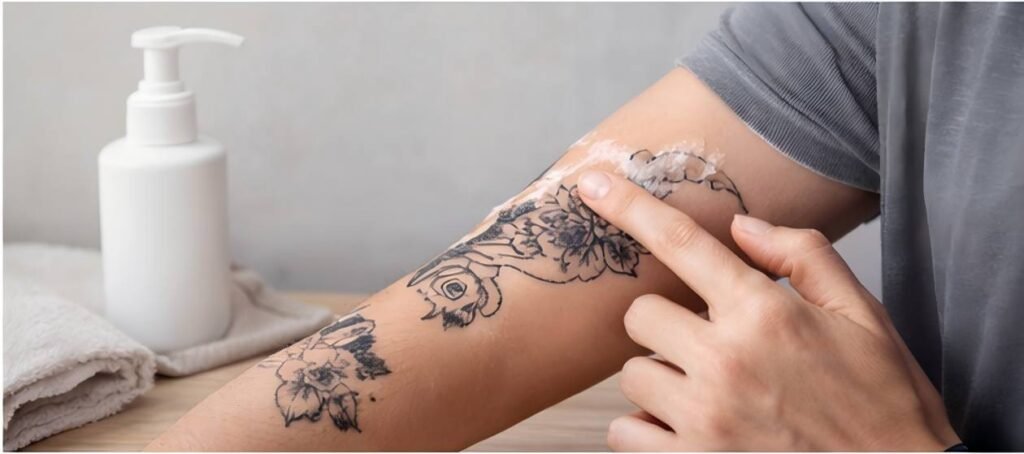
What should you avoid during the tattoo recovery process?
Avoid soaking a fresh tattoo in water, swimming pools, hot tubs, and baths until the skin is fully closed; avoid direct sun exposure, heavy sweating, tight friction clothing, picking scabs, and using harsh skincare actives. These stress the healing barrier, increase irritation, and can lead to uneven healing or pigment loss. When in doubt, choose the option that keeps the tattoo clean, cool, and protected.
Why does soaking slow recovery more than showering?
Soaking keeps the skin waterlogged for long periods, which can soften scabs and weaken the rebuilding barrier. A shower is brief and rinses away residue without extended saturation. Think of soaking as “long exposure,” and healing skin generally hates long exposure to water.
When is it safe to swim, bathe, or use a hot tub again?
It’s safest once the tattoo is fully closed on the surface—no open areas, no weeping, and no active peeling. Even then, the earlier you go back, the more you gamble with irritation. If you’re planning a vacation or beach trip, schedule tattoos with recovery time in mind.
How does sweat and friction affect recovery by placement?
Sweat plus friction plus tight fabric can inflame healing skin, especially in folds or high-contact areas. Tattoos on ribs, thighs, under waistbands, or anywhere clothing rubs tend to get angrier if you return to intense workouts too early. If you do sweat, wash gently afterward and keep clothing loose.
Quick placement cautions:
- Under waistbands: friction + trapped heat
- Inner arm/underarm area: sweat + movement
- Ankles/feet: socks + shoes
- Hands: constant washing + use
What happens if you pick, peel, or scratch a healing tattoo?
Picking can pull off healing tissue before it’s ready, which can remove pigment from the surface layer, increase the chance of scarring, and extend the recovery timeline. If itch is intense, use a thin layer of moisturizer, briefly cool the area with a clean compress, or tap lightly around it instead of scratching.
Which “quick fixes” usually make recovery worse?
Over-correcting is the classic trap. Scrubbing harder, applying thicker layers, switching products daily, and trying to “speed it up” with strong actives usually adds irritation and delays calm healing. Consistency beats intensity.
Copyable “avoid list” (paste into notes):
- No soaking (bath/pool/hot tub)
- No picking or peeling flakes
- No direct sun
- No acids/retinoids/scrubs on the area
- No tight compression on the tattoo
- No heavy ointment layers that stay shiny
Which activities can you safely do again, and when?
Most “when can I…?” decisions become easy if you treat healing like barrier repair: the more water, friction, and germs involved, the longer you wait. This is a typical guide; your artist’s instructions and your own healing trend matter.
| Activity | Typical earliest window for many people | Safer rule of thumb |
|---|---|---|
| Normal shower | Same day or next day | Keep it brief, lukewarm, gentle wash |
| Light walking | Day 1–2 | Avoid rubbing clothing and heavy sweat |
| Gym workout (moderate) | Around 5–10 days | Wait until no weeping and minimal tenderness |
| Heavy sweating/HIIT | Around 10–14 days | Avoid until peeling is mostly done |
| Swimming (pool/ocean/lake) | Often after 2–4+ weeks | Wait until fully closed and no peeling |
| Hot tubs/saunas | Often after 3–6 weeks | Heat + soaking = high irritation risk |
| Direct sun exposure | After surface fully healed | Cover first; use sunscreen only when fully closed |
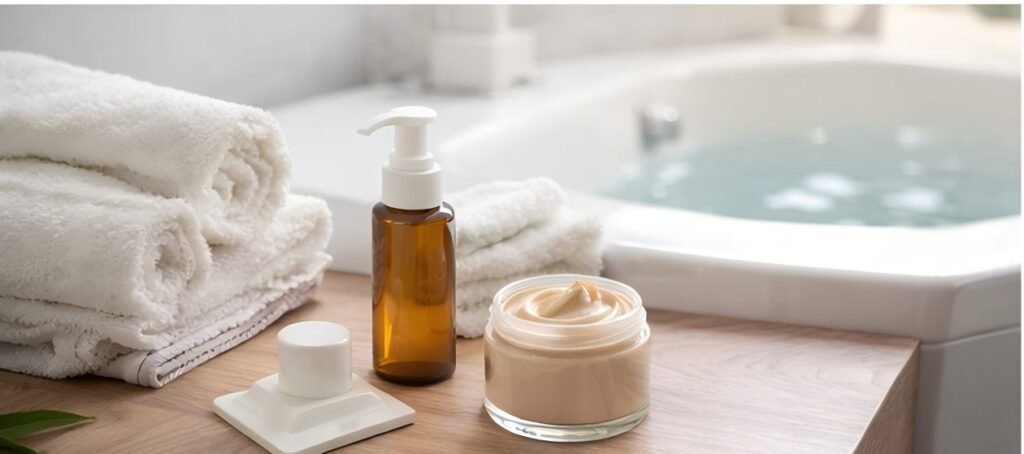
Which aftercare products and ingredients support healing, and which can slow it down?
Good tattoo aftercare products support barrier repair, reduce excessive dryness and itch, and avoid common irritants like strong fragrance, harsh alcohols, and aggressive exfoliating acids. The best option depends on your skin type and the tattoo stage: early healing often needs a protective but breathable balm used sparingly, while later peeling may do better with a lighter, fragrance-light lotion. “Natural” isn’t automatically gentler—some essential oils can irritate healing skin.
What should an aftercare product do—and what should it avoid?
A good aftercare product should reduce tightness, feel comfortable under clothing, and keep the surface from cracking—without leaving a heavy film. It should also avoid ingredients that commonly sting compromised skin. The goal is support, not stimulation.
Quick product checklist:
- Spreads easily in a thin layer
- Doesn’t stay shiny for hours
- Doesn’t sting on application
- Doesn’t feel overly perfumed
- Doesn’t cause bumps after a day or two
Which is better during recovery: balm or lotion?
Balm tends to work best early when the tattoo feels tight and tender, as long as you apply it thinly. Lotion often works best once peeling starts and the tattoo is no longer weeping, because it hydrates without trapping too much moisture. Many people do well with balm early, then transition to a light lotion later.
Simple stage-based approach:
- Days 1–3 (tender/tight): thin balm layer
- Days 4–14 (peeling): light lotion or very thin balm as needed
- Weeks 3–6 (settling): moisturize when dry; protect from sun
Are “natural oils” always safer for healing skin?
Natural oils can be fine in small amounts, but they aren’t automatically safer and can be too heavy for some skin types. Oils and butter-rich balms can seal in moisture, but they can also feel occlusive and trigger bumps on oily or acne-prone skin. Essential oils can smell pleasant but may irritate compromised skin. If you use oils, use a tiny amount and watch your skin’s response.
A realistic compromise:
- If you’re dry-prone: tiny amount may feel great
- If you’re bump-prone: lighter textures are usually easier
Which ingredients are usually helpful vs risky on fresh tattoos?
Simple, fragrance-light bases tend to be the easiest for healing skin to tolerate. Very active or heavily scented formulas often create unnecessary variables during recovery.
| Helpful directions | Use with care | Usually avoid on a fresh heal |
|---|---|---|
| Barrier-supporting emollients | Thick occlusives if you clog easily | Strong fragrance or perfume-heavy products |
| Gentle hydration-supporting humectants | Botanical extracts if you’re reactive | Exfoliating acids (AHA/BHA/PHA) early on |
| Soothing skin conditioners | Heavy petrolatum layers all day | Alcohol-heavy toners or astringents |
| Simple, low-irritant bases | Essential oils (can irritate) | Scrubs, peeling gels, harsh actives |
Do antibiotic ointments help tattoo healing—or create new issues?
Antibiotic ointments aren’t a universal “better aftercare,” and overuse can keep the area too wet or irritate some skin types. If your artist gave specific guidance, follow it, but avoid treating antibiotic ointment like an all-day coating. If you suspect infection, that’s not a “try a stronger ointment” situation—it’s a “get assessed” situation.
Copyable “keep it simple” routine:
- Mild wash 2x/day
- Thin aftercare layer
- Loose clothing
- No soaking, no picking, no sun
Conclusion
The tattoo recovery process is mostly about helping your skin do what it already knows how to do: rebuild a calm, protective barrier. In the first days, focus on clean hands, gentle washing, and thin product layers that relieve tightness without smothering. In the peeling phase, keep your routine steady, resist picking or scratching, and protect the tattoo from friction, sweat, soaking, and sun. Judge healing by the trend—things should gradually get calmer, not more painful or more inflamed. If redness spreads, pain increases, you see pus-like discharge, fever, or red streaking, take it seriously and seek medical care.
For tattoo studios, aftercare brands, and retailers developing a private label tattoo aftercare gel, balm, lotion, or recovery kit, Zerun Cosmetic can support formula development, packaging selection, stability planning, and sampling. Share your target market, texture preference, scent direction, and positioning, and request a quote and sample plan to build an aftercare line customers can trust.