If you’ve ever stood in a beach store juggling “reef safe,” “mineral,” and “Hawaii-compliant” labels, you know the confusion is real. Consumers want ocean-friendly formulas that still feel good and look great on every skin tone; brands want clear rules, stable supply chains, and credible claims.
Reef-safe sunscreen generally means formulas that avoid UV filters flagged for coral toxicity (e.g., oxybenzone, octinoxate; often octocrylene and others), and instead use non-nano zinc oxide and/or titanium dioxide at broad-spectrum levels, paired with ocean-minded packaging. Because “reef safe” lacks a single global legal definition, brands should verify local laws, choose tested mineral filters, validate SPF/UVA/water resistance, and communicate claims precisely.
Hooked? Below, we decode what “reef safe” really means, how to read labels, which filters to pick, how to test and claim responsibly, and how Zerun can build you a compliant, great-feeling, private-label line.
What does “reef safe” actually mean?
There’s no single, universal legal definition of “reef safe.” In practice, retailers and destinations use it to describe sunscreens that exclude certain organic UV filters implicated in coral harm and favor mineral filters (non-nano zinc/titanium). Real compliance depends on local laws, credible test data, and honest labeling—not just a sticker on the bottle.
Marketing term vs. legal requirement
“Reef safe” is widely used but not uniformly regulated. Some places restrict specific filters; others focus on education rather than bans. Treat “reef safe” as a policy-driven claim—what counts in Maui may differ from the USVI or a marine park elsewhere.
Why coral toxicity is complex
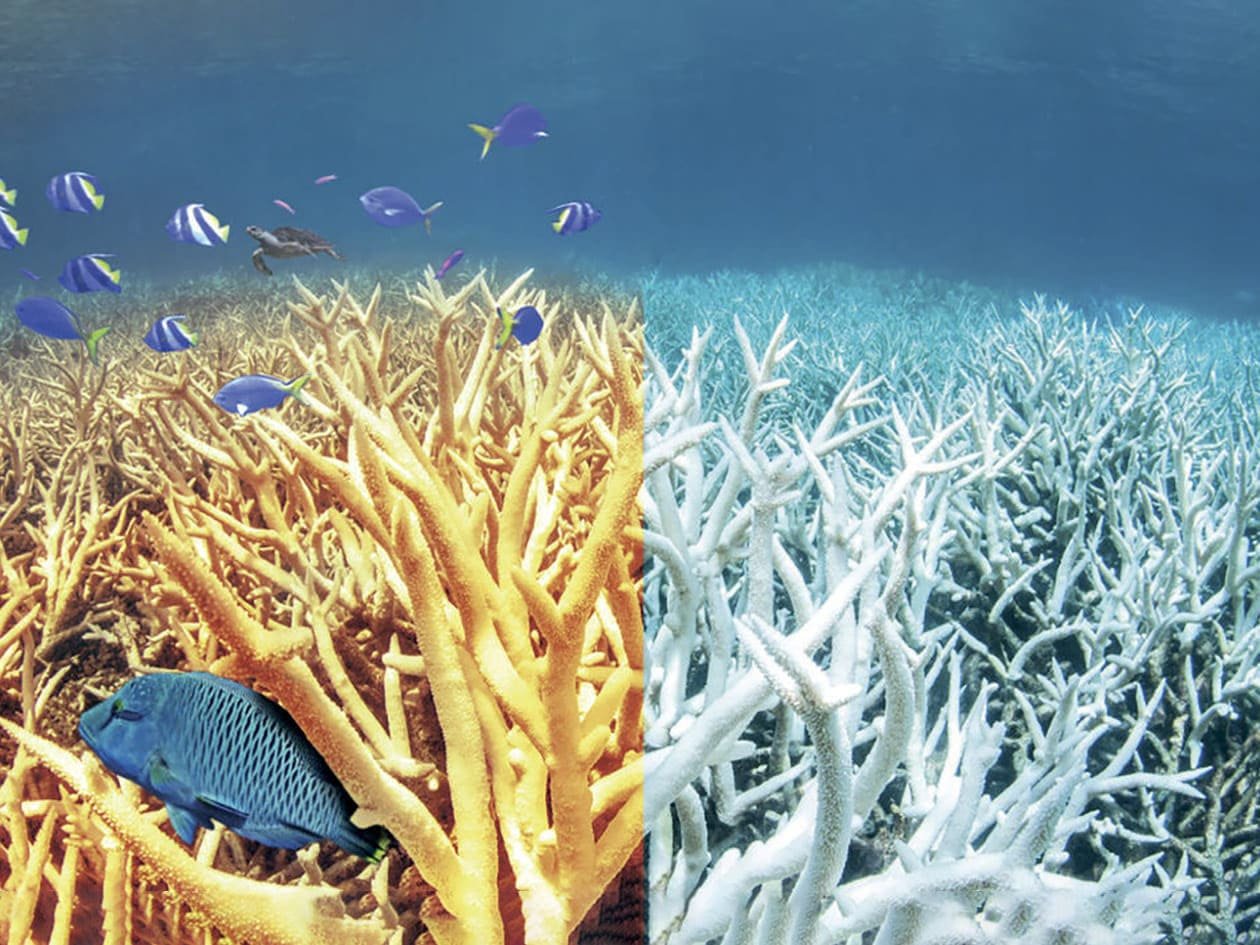
Coral health is influenced by water temperature, pollution, sediment, and tourism load—not sunscreen alone. Still, proactively avoiding hot-button filters and improving wash-off profiles helps brands align with consumer expectations and destination rules.
The practical standard many brands follow
- Exclude: oxybenzone, octinoxate (often octocrylene; some destinations flag more).
- Prefer: zinc oxide (often 15–25%) and/or titanium dioxide (often 4–10%), using non-nano grades and sheer tints for cosmetic elegance.
- Validate: Broad-spectrum protection and water resistance; keep claims location-accurate.
The take-home
“Reef safe” = policy-aligned mineral strategy + transparent claims + testing. Treat it like a compliance and design problem, not just a marketing tagline.
Why Choose Reef-Safe Sunscreen?
Because it’s the rare win-win: mineral filters provide broad-spectrum UV defense, avoid filters some destinations restrict, and align with eco-conscious buyer values. Brands that formulate reef-forward also discover new textures (tinted gels, serum SPF, mousse) that delight consumers and reduce returns from white cast or pilling.
Demand signals you can’t ignore
Searches for “reef safe,” “non-nano zinc,” and “Hawaii-compliant sunscreen” have grown steadily. Retailers and resorts curate “mineral-only” shelves, and tour operators increasingly recommend (or require) mineral SPF for snorkeling and diving.
Brand equity & differentiation
Ocean-friendly positioning supports lifecycle storytelling: safer filters, PCR packaging, bag-on-valve sprays, and leak-resistant sticks for travel. Done well, reef-forward lines earn better on-site conversion and repeat purchases from outdoor families, surfers, and travelers.
Performance: not just “safe,” also effective
Modern mineral systems (optimized dispersion, hybrid emollients, film formers) can hit SPF 50 PA++++ with water resistance and a comfortable finish—especially when paired with skin-tone adaptive tints.
B2B reality check
You’re also future-proofing. Even if your local market has no restrictions today, destination buying and travel retail will reward aligned formulas.

What to Look for on the Label?
Look for “zinc oxide” and/or “titanium dioxide” as active filters, ideally non-nano labeled. Seek “broad spectrum”, SPF 30–50, and water resistance (40/80 min) where relevant. Avoid banned filters where you sell. Bonus points for tinted options, sheer/mineral claims with proof, and clear disposal/recycling info.
Active filters (Drug Facts / INCI)
- Mineral-only actives signal reef-forward intent.
- If a product lists oxybenzone, octinoxate (and in some places octocrylene or others) and you’re targeting sensitive destinations, reconsider.
Protection language
“Broad spectrum” (UVA + UVB) should be explicit. If you market beyond the U.S., PA or UVA-PF helps global shoppers compare.
Cosmetic elegance cues
Phrases like “tinted,” “sheer mineral,” “non-whitening dispersion,” “hybrid gel-cream” hint at better wear. Check finishes: matte, satin, dewy—then ensure shade range coverage.
Sustainability signals
Look for PCR content, aluminum or glass, bag-on-valve, and reef-friendly disposal guidance. Avoid ambiguous icons; be concrete.
QR for proof
A QR code linking to test summaries and local-law compatibility builds trust—and reduces customer service load.
Label Checklist
| Label Element | What to See | Why it Matters |
|---|---|---|
| Active filters | Zinc oxide, titanium dioxide (mineral-only) | Aligns with reef-forward expectations |
| Claims | Broad Spectrum; SPF 30–50; Water Resistant 40/80 | Performance & beach-readiness |
| Finish/tones | Sheer/tinted; shade descriptors | Reduces white cast returns |
| Packaging notes | PCR %, aluminum, glass, bag-on-valve | Ocean-friendly story, recyclability |
| Local-law note | “Complies with [destination] restrictions” | Avoids retail friction, builds trust |
| QR link | Test summaries, disposal guidance | Radical transparency, fewer tickets |
Which UV filters qualify and which should you avoid?
Qualify: Non-nano zinc oxide and, where appropriate, non-nano titanium dioxide. Avoid: filters frequently restricted in reef contexts (e.g., oxybenzone, octinoxate; some destinations flag octocrylene, 4-MBC, and others). Always map your SKU list to current local rules, because restrictions evolve.
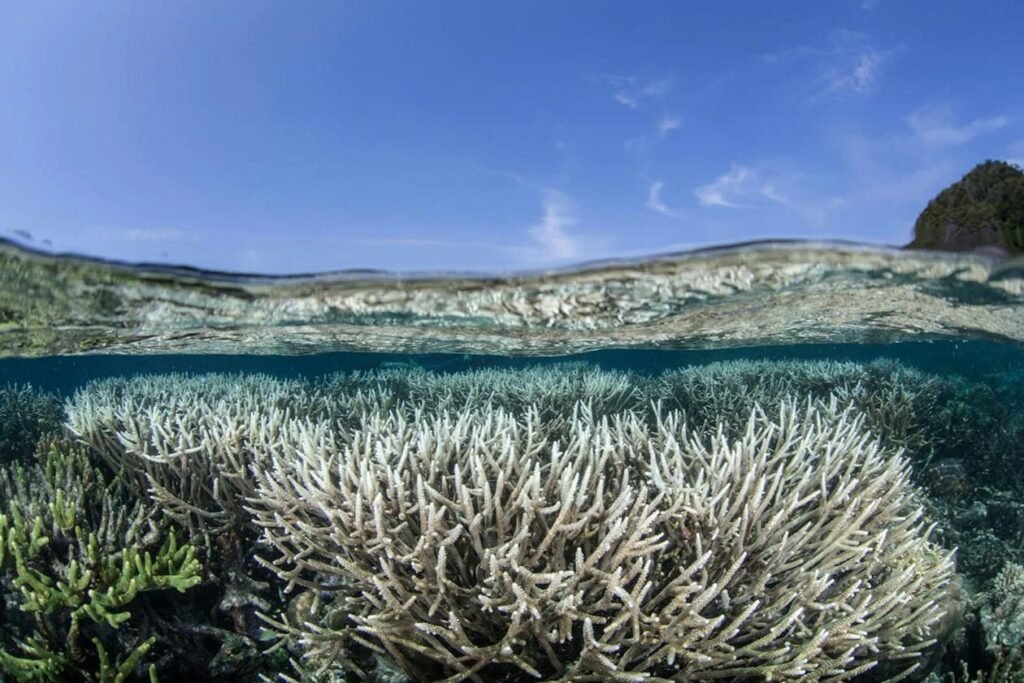
Mineral filters in practice
- Zinc oxide: Broad UVA-UVB coverage; excellent for sensitive skin.
- Titanium dioxide: UVB/UVA-II focused; often co-formulated with zinc for balance.
- Formulation truths: Particle coatings (silica, alumina, triethoxycaprylylsilane), dispersion quality, and emollient selection drive feel and opacity.
“Avoid” list nuance
- Oxybenzone and octinoxate are the poster children for restrictions.
- Octocrylene is frequently discouraged in “reef-safe” positioning and restricted by some destinations.
- Some locations flag an expanded list; always verify per market to avoid costly relabels.
Non-nano logic
Many retailers prefer explicit non-nano claims to reassure eco-minded shoppers. Achieve elegance via tints, adaptive iron oxides, and optimized dispersion rather than shrinking particles toward nano.
Filters alone aren’t the whole story
Film formers, emulsifiers, and wash-off behavior matter. Choose biodegradability-minded auxiliaries and low-residue systems to lower environmental footprint without sacrificing water resistance.
UV Filter Map
| Filter | Reef-Safe Positioning | Typical Role | Notes |
|---|---|---|---|
| Zinc Oxide (non-nano) | Preferred | Broad UVA/UVB | Tints improve wear; great for sensitive |
| Titanium Dioxide (non-nano) | Preferred (paired) | UVB/UVA-II | Often needs ZnO for full UVA |
| Oxybenzone | Avoid in reef contexts | UVB/UVA-II | Restricted in multiple destinations |
| Octinoxate | Avoid in reef contexts | UVB | Commonly restricted |
| Octocrylene | Often discouraged | UVB | Reassess per market |
| 4-MBC, OD-PABA, etc. | Often discouraged/flagged | Varies | Check local lists before launch |
Examples of Reef-Safe Sunscreen Brands
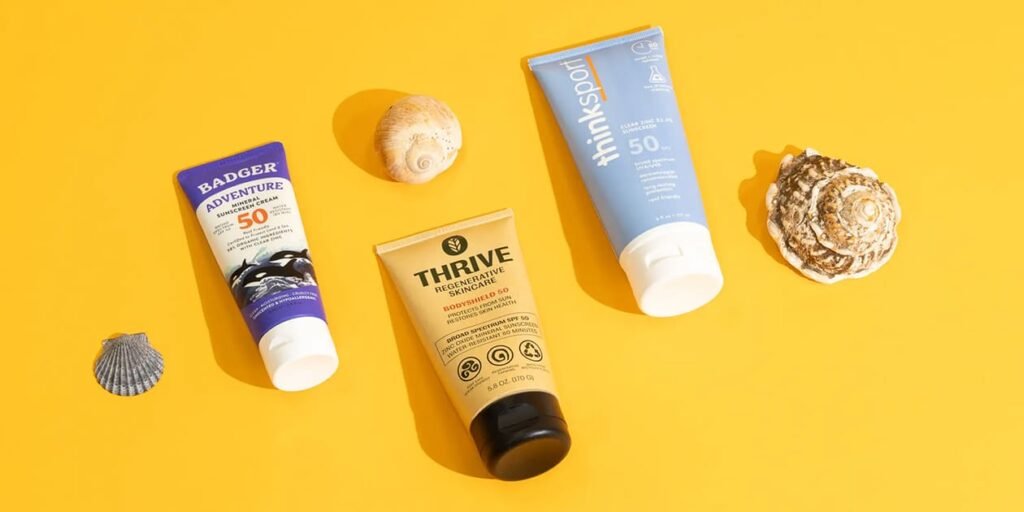
Brand summary
| Brand | HQ / Origin | Founded | Flagship sunscreen product (reef-forward) | Primary audience |
|---|---|---|---|---|
| Sun Bum | Cocoa Beach, FL & Encinitas, CA | 2010 | Mineral SPF 50 Sunscreen Lotion (zinc) | Families, surfers, beachgoers |
| Thinksport | Simi Valley, CA (USA) | 2006 | SPF 50 Clear Zinc (non-nano) | Athletes, active adults, kids (via Thinkbaby) |
| Badger | Gilsum, New Hampshire (USA) | 1995 | Sport Mineral Sunscreen Cream SPF 40 | Outdoor / water sports, sensitive skin |
| Stream2Sea | Wauchula, Florida (USA) | 2015 | Mineral SPF 20/30 (tested on coral larvae) | Divers, snorkelers, eco-travelers |
| Kōkua Sun Care | Hawaiʻi, USA | 2017 (launch) | Hawaiian Natural Zinc Sunscreen SPF 50 (25% ZnO) | Locals & tourists, ocean athletes |
| Raw Love | Maui, Hawaiʻi (USA) | 2015 | Mineral Sunscreen SPF 30–35 (non-nano zinc) | Eco-families, divers, tattoo wearers |
| Supergoop! | San Antonio, Texas (USA) | 2007 | Mineral Unseen SPF 40 (zinc) & Unseen (chemical) | Daily SPF users, makeup wearers |
Sun Bum (reef-friendly mineral range)
Sun Bum offers a mineral line headlined by Mineral SPF 50 Sunscreen Lotion, a zinc-based, fragrance-free formula that’s Hawaii Act 104 compliant (no oxybenzone, no octinoxate) and water-resistant 40 minutes. As a company, Sun Bum began in 2010 with roots in Cocoa Beach, FL, and an additional office in Encinitas, CA—surf culture is embedded in the brand’s DNA. For shoppers seeking reef-aligned picks, prioritize the Mineral collection (zinc/titanium actives) rather than the brand’s “Original” chemical filters.
Thinksport (clear non-nano zinc)
Thinksport’s SPF 50 Clear Zinc uses non-nano zinc oxide for broad-spectrum protection with minimal white cast; the FDA/Drug Facts listing confirms 20% non-nano zinc oxide. The Think family of brands traces back to 2006 under founder Kevin Brodwick (Thinkbaby/Thinksport), with operations listed in Simi Valley, CA. For reef considerations, their mineral actives avoid oxybenzone/octinoxate and align with destinations that prefer mineral filters; the “clear” dispersion improves usability for athletes and kids (via sister brand Thinkbaby).
Badger (Protect Land + Sea–certified sport cream)
New Hampshire–based Badger (founded 1995) is known for short-INCI mineral formulas. Its Sport Mineral Sunscreen Cream SPF 40 achieved the Protect Land + Sea certification—an independent standard screening ingredients against known marine toxicants—making it a strong option for reef-minded consumers. The brand manufactures in Gilsum, NH, and emphasizes simple, organic ingredients that suit sensitive skin and long days in the water. Look for their “Sport SPF 40” and “Kids” mineral variants for family use.
Stream2Sea (biodegradability + coral-larvae testing)
Stream2Sea (founded 2015) stakes its reputation on third-party ecotoxicology: the company publishes coral larvae settlement tests and highlights Protect Land + Sea certification for select mineral SKUs. HQ is in Wauchula, Florida. If your use case involves snorkeling, free-diving, or marine parks, Stream2Sea’s test transparency and biodegradable claims help align product choice with local operator guidance. Always confirm the exact product’s test status and follow reapplication rules for real-world protection.
Kōkua Sun Care (Hawaiian zinc at 25%)
Hawaiʻi-born Kōkua Sun Care launched publicly around 2017 and is known for SPF 50 with 25% non-nano zinc oxide plus locally sourced botanical antioxidants; the brand frames its product as high-performance, water-resistant (80 min) and designed for island conditions. Kōkua positions explicitly for reef-forward compliance in Hawaiʻi and partners with local events (e.g., IRONMAN Hawai‘i). For best wear, their newer tinted options reduce white cast across skin tones.
Raw Love (Maui-made, non-nano mineral)
Maui-based Raw Love (founded 2015) focuses on non-nano zinc mineral sunscreens and emphasizes Hawaiʻi compliance (no oxybenzone/octinoxate). The brand asserts it was the first FDA-compliant Hawaiʻi mineral sunscreen, offers tins/sticks/tubes, and positions its formulas for sensitive skin and ocean users. For reef-aligned shopping in the islands, the simple mineral active plus biodegradable-minded marketing are the key cues—still, check local park guidance for any additional restrictions.
Supergoop! (mineral and “reef-friendly” choices)
Supergoop! (founded 2007; San Antonio, TX) offers both mineral and chemical sunscreens. For a reef-forward pick, choose Mineral Unseen SPF 40 (zinc-based) rather than the original Unseen Sunscreen, which is chemical (e.g., avobenzone/octisalate/octocrylene) and may not meet stricter destination restrictions—even though it’s often marketed “reef-friendly” for avoiding oxybenzone/octinoxate. The brand’s strength is texture innovation and daily-wear appeal; just match the filter type to local rules.
How should you test and label: SPF/UVA, water resistance, PA, and “reef-safe” wording?
Run SPF testing plus UVA (in-vitro or in-vivo per market), and water-resistance (40/80-minute) where claimed. If you use PA or UVA-PF, align with local standards. Avoid vague “reef-safe” wording; anchor claims in filter choice, destination compatibility, and third-party test summaries.
SPF testing basics
- SPF remains the global headline. Validate at accredited labs; keep stability data to support label shelf life.
- Consider in-market re-verification if you sell in multiple geographies.
UVA—communicate clearly
- EU/UK expect specific UVA protection criteria; Asia consumers recognize PA (PA+, PA++, etc.).
- The UVA story matters for coral-minded buyers too, since UVA drives deep-tissue exposure and photoaging.
Water-resistance
- If you claim it, test it (40 or 80 minutes). Communicate reapplication by activity: swimming, sweating, towel-drying.
“Reef-safe” wording
- Prefer fact-based phrasing: “Mineral-only UV filters (non-nano zinc/titanium); no oxybenzone, no octinoxate,” plus “Compatible with [destination] guidance.”
- Add QR to test result summaries; avoid implying universal certification.
Claims governance & R&D alignment
- Keep R&D, regulatory, and marketing synced so artwork and websites mirror test outputs and destination rules.
Testing & Labeling Matrix
| Claim/Element | Test/Standard | Label Cue | Practical Tip |
|---|---|---|---|
| SPF 30/50 | In-vivo SPF | Bold on front + Drug Facts/INCI | Re-verify when changing dispersion or emollients |
| UVA/PA | In-vitro UVA-PF / PA | “Broad Spectrum” + PA or UVA icon | Align per market (EU/UK vs. APAC) |
| Water Resistance | 40/80 min | “Water Resistant (40/80 min)” | Add “reapply after 80 min swim” |
| Reef-safe stance | No single global test | “Mineral-only; no [filters]; compatible with [destination]” | QR to lab summaries & destination list |
| Stability | Accelerated & real-time | PAO symbol, lot code | Store cool, opaque packs |
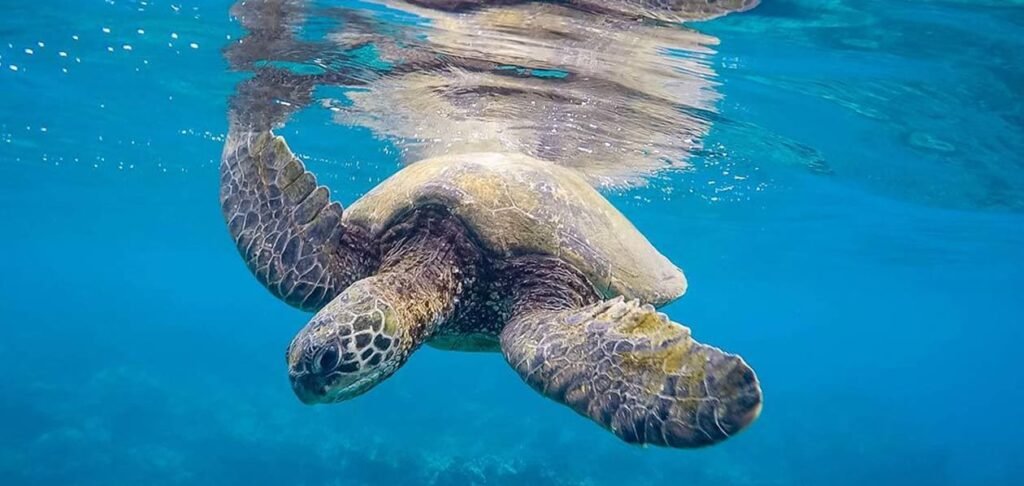
Which packaging is ocean-friendly?
Prioritize recyclable and recycled substrates—PCR HDPE/PET, aluminum, glass—and formats that reduce propellant and leakage, like bag-on-valve or twist-lock pumps. Print clear disposal guidance, consider refill systems, and choose UV-barrier resins to protect L-AA-type actives when relevant.
Substrate pros and cons
- PCR plastics (HDPE/PET): Readily recyclable; traceable PCR content supports claims.
- Aluminum: Lightweight, highly recyclable; excellent barrier.
- Glass: Premium feel; good barrier; heavier to ship.
- Bio-resins: Evolving—great story, but validate barrier and compatibility.
Formats that matter at the beach
- Bag-on-valve sprays: Less propellant; consistent spray pattern; good for family use.
- Sticks: Low leak, great for nose/ears/under-eye and kids.
- Twist-lock pumps/tubes: Reduce cap loss; good for water sports bags.
Labeling & guidance
Add How to Dispose panels: remove pump where required, rinse, recycle by stream. A QR can show city-specific rules.
Freight & breakage
If you sell online into beach destinations, test ISTA shipping; consider airless tubes to balance barrier and weight.
Packaging Options
| Option | Ocean-Friendly Angle | Barrier/Protection | Notes |
|---|---|---|---|
| PCR HDPE/PET | Recycled content, recyclable | Good with UV-barrier grades | Declare PCR %; use opaque masterbatch |
| Aluminum | High recycling value | Excellent | Great for sprays/tubes; check lining |
| Glass | Premium + recyclable | Excellent | Heavier; consider travel safety |
| Bag-on-Valve | Lower propellant; controlled spray | Strong | Family-friendly; good for beaches |
| Sticks (PP) | Low leak; targeted use | Good | Perfect for kids/sports zones |
How can brands private-label with Zerun: MOQs, timelines, base formulas, global compliance?
Zerun offers mineral-only base formulas (zinc/titanium, tinted/untinted) with ISO 22716/GMP manufacturing, low MOQs (500 units), free design, and free samples. Typical timelines: 3–7 days for sampling, 4–8 weeks to production. We align claims, tests, and packaging to your target markets and destination rules.
Ready-to-customize base formulas
- SPF 30/50 mineral lotions (tinted and untinted).
- Stick formats for kids and sports.
- Sheer mineral gel-creams and serum-SPF hybrids for face.
- Water-resistant options (40/80 minutes).
Shade range & elegance
We build iron-oxide tints across light/medium/deep with undertone tuning (cool/neutral/warm). Our dispersion tech reduces white cast without leaning on nano.
Ingredient policy
Default exclude list aligns with reef-forward expectations (no oxybenzone, no octinoxate; optional exclusion of octocrylene and others per your target market). We also optimize wash-off profiles and select biodegradability-minded auxiliaries.
Testing & documentation
We coordinate SPF, UVA/PA, water-resistance, plus stability (accelerated and real-time) and compatibility with chosen packaging. You receive COAs, PIF-style dossiers where applicable, and support for destination-specific claims wording.
Packaging & artwork
Choose PCR plastics, aluminum, glass, or bag-on-valve. Our design team offers free label layout with QR-linked test summaries and disposal guidance for retailers/tour partners.
Commercials & timelines
- Sampling: 3–7 business days (tints included).
- Pilot run: typically 4–8 weeks post-approval.
- MOQ: ~200–500 units depending on format/shades.
- Scale: Multi-shade and family sizes supported.
Private-Label Roadmap
| Phase | What You Choose | What Zerun Delivers | Typical Duration |
|---|---|---|---|
| Brief | Target markets, “avoid” list, finish, shade range | Feasibility check + base recommendations | 1–3 days |
| Sampling | Tint/fill weight, scent (or fragrance-free), packaging | 2–3 lab pilots + stability start | 3–7 days |
| Validation | Final formula, packaging dielines | SPF/UVA/water-resistance testing kick-off | 2–6 weeks (in parallel) |
| Production | POs, artwork, logistics | GMP batch, QC, COA, packing list | 4–8 weeks |
| Launch | Retailer onboarding, education | QR test page, disposal guide, sell-in deck | 1–2 weeks |
Mineral Texture Tuning
- Slip & spread: Use light silicones or silicone alternatives (or select esters) compatible with destination rules.
- White cast minimizers: Micro-tints + brown-red iron oxides; avoid heavy yellow that can dull deep tones.
- Matte vs. dewy: Matte for sports; satin for face daily wear.
- No pill zone: Balance film formers and avoid over-thickened gels that clash with moisturizers.
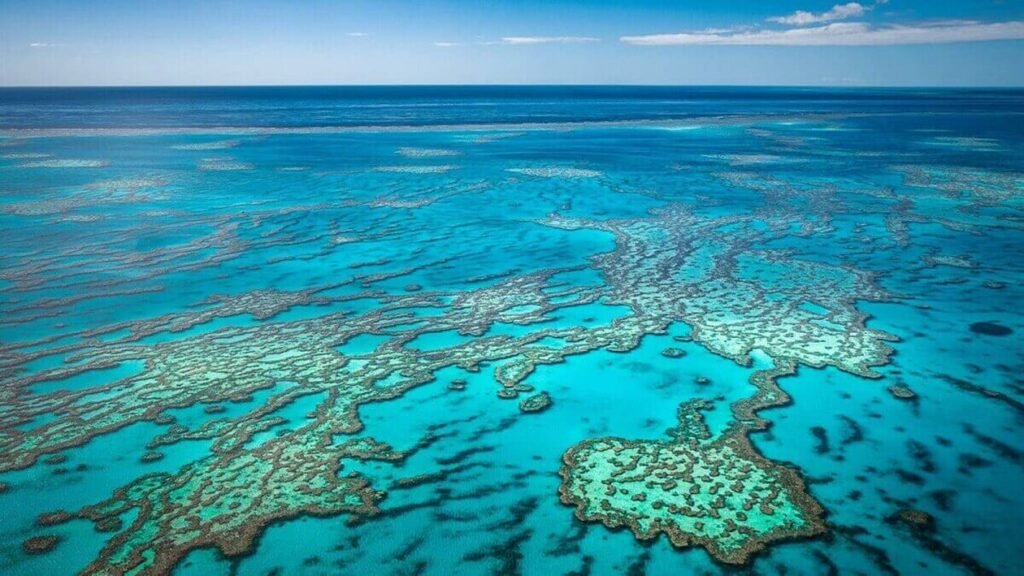
Conclusion
“Reef safe” isn’t a single badge; it’s a set of choices—filters, textures, testing, wording, and packaging—that travel well across coastlines and regulations. If you favor non-nano zinc/titanium, validate SPF/UVA/water resistance, label precisely for your markets, and choose ocean-friendly packaging, you’ll earn consumer trust without sacrificing performance. Add shade-smart tints and modern dispersion, and you’ll crack the comfort code too.
Ready to build your ocean-friendly SPF line? Zerun Cosmetic manufactures mineral-only, reef-forward sunscreens with ISO 22716/GMP, low MOQs (500), free design, and free samples—from tinted SPF 50 face serums to family-size bag-on-valve sprays and kid-safe sticks. Tell us your destination markets, “avoid” list, and finish goals—we’ll match a base, tint the range, run the tests, and help you launch with confidence.