Skip to content
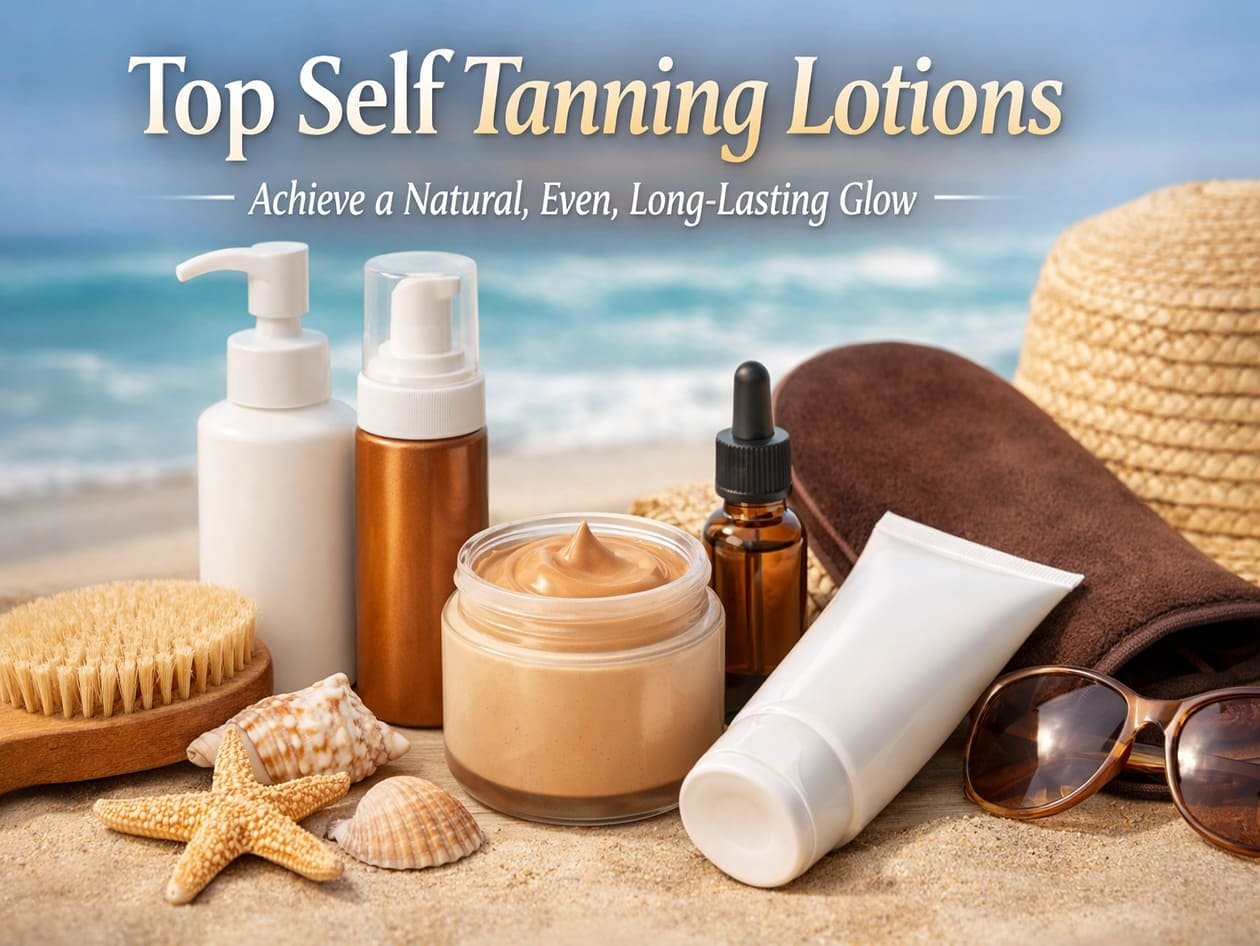
A “top” self tanning lotion isn’t the one with the biggest promises. It’s the one that behaves when your day doesn’t. You apply it after a rushed shower, throw on comfortable clothes, and forget about it—then later you catch yourself in the mirror and think, “That looks like me, just healthier.” No sticky regret. No mystery stripes. No knees that went three shades darker than the rest of your leg.
Top self tanning lotions are the ones that match your skin tone and your routine: the right DHA direction for your desired depth, a bronzer style (or no bronzer) that fits how you apply, and a lotion base that hydrates enough to fade evenly instead of cracking and patching. The simplest way to choose is to focus on five things: your undertone, how deep you want to go, whether you need guide color, how dry your skin gets on joints, and how you want it to fade over several days.
If you’ve tried self tanner before and decided it “just isn’t for you,” you’re usually one small adjustment away from a very different result. Let’s make it easy.
What makes a self tanning lotion “top” for everyday use not just marketing?
A top self tanning lotion applies predictably, develops into a believable tone for your undertone, and fades evenly without spotlighting dry areas. It gives you enough blend time to smooth mistakes, dries down without staying tacky, and doesn’t leave you worried about transfer. The best ones also keep skin comfortable and make the classic self-tan smell feel much less noticeable.
What “top” looks like outside perfect lighting
The difference shows up after a few showers.
A top lotion still looks good when:
- you’ve showered two or three times
- your shins are slightly dry
- you wore jeans or leggings
- you forgot to moisturize one night
If the tan fades smoothly, you stay confident. If it breaks into speckles and patches, you’ll feel forced into “fixing mode,” which usually means scrubbing too hard or layering too aggressively.
The six pillars that separate great from “never again”
When you’re judging a lotion, focus on:
- blend window (you have time to correct)
- tone realism (golden/neutral/soft olive that looks like skin)
- joint behavior (knees/elbows/ankles don’t go loud)
- dry-down and transfer (sets without staining everything)
- comfort (no tight, itchy, overly perfumed feeling)
- fade pattern (even lightening, not random striping)
A quick note on why “orange” and “patchy” happen
Two common issues have simple roots:
- Orange usually comes from applying too much, too fast, or choosing a warmth level that fights your undertone.
- Patchiness usually comes from dry zones absorbing more color, then shedding unevenly with friction and showers.
The product matters—but the routine matters just as much.
How to use reviews without getting misled
When you see “streaky” or “turned me orange,” check if the reviewer mentions:
- moisturizing knees/elbows/ankles first
- applying with a mitt or glove
- letting it set before dressing
- judging after a few days (more honest than day one)
Fast-drying formulas can be amazing for experienced users and frustrating for anyone who needs more blend time.
Use this table to shortlist 2–3 options before you buy.
| What to evaluate | What a “top” result looks like | What to watch out for |
|---|---|---|
| Blend time | Easy to smooth for a few minutes | Grabs instantly, streak risk |
| Dry-down | Sets without staying sticky | Tacky feel, high transfer |
| Tone | Believable for your undertone | Too warm/orange or overly gray |
| Joints | Knees/elbows stay subtle | Dark joints, patchy elbows |
| Comfort | Feels like skincare | Tight/itchy/heavily perfumed |
| Fade | Even lightening over days | Speckling, cracking, striping |
Which DHA level and bronzer style should you choose for your skin tone and desired depth?
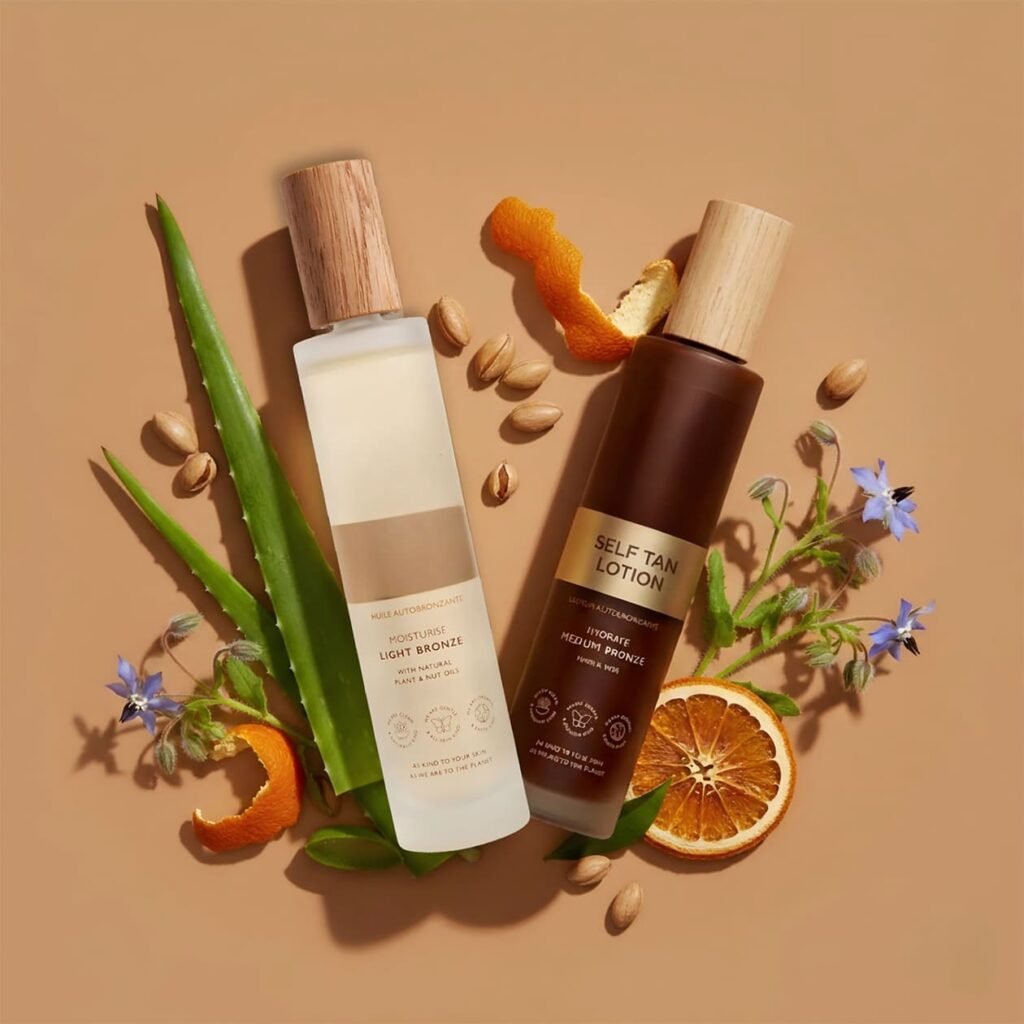
Choose DHA direction based on how deep you want the color and how quickly you want it, then choose bronzer style based on how confident you are applying. Gradual or lower-intensity options are easier to control and forgive mistakes. Higher-intensity or “express” directions can look incredible, but they also expose prep issues—especially around dry zones.
What DHA is doing
DHA creates temporary color on the outer surface of skin. That’s why:
- uneven texture can create uneven results
- it fades as skin naturally sheds
- you can build it in layers instead of going heavy once
This is the easiest mindset shift: you’re not painting skin, you’re guiding a gradual surface change.
A practical way to choose intensity
Brands don’t always show exact percentages, so think in “direction.”
| Intensity direction | What it usually looks like | Best for | Common mistake |
|---|---|---|---|
| Gradual / low | Soft glow that builds | beginners, sensitive skin, low-drama routines | layering too soon |
| Medium | Noticeable tan after one use | most skin tones, weekly routine | skipping joint prep |
| High / express | Deeper color quickly | experienced users, event tanning | rushing application |
If you’re unsure, start one step lighter than you think. You can always deepen a good base.
Which bronzer style fits your application habits?
Tinted (guide color)
Best if you want to see coverage. Helps reduce missed spots. May transfer before it fully sets.
Clear (no guide color)
Cleaner feel, often less immediate transfer. Easier to miss areas if you’re rushing or applying in poor lighting.
Tone-leaning styles (neutral vs warm)
Some formulas lean more neutral to reduce “too warm” results on certain undertones. Helpful—but it won’t fix heavy application on dry skin.
Underselling the undertone is the most common mistake
Quick cues:
- If you flush pink/red easily, neutral-to-golden often looks more believable than very warm tones.
- If you’re olive or tend to look a bit sallow, a soft golden glow can look healthy—but overly warm can look artificial.
- If you’re very fair, gradual or medium usually looks more natural than one-session ultra-dark.
Face and body: do you need different products?
Often yes. The face gets washed more, shows texture differently, and may be more reactive. Many people prefer a lighter, buildable approach for face and a classic lotion routine for the body.
How do self tanning lotions compare with mousse, drops, and sprays—and which is easiest to apply?
Lotions are often the most forgiving for dry skin and give you more blend time. Mousses usually dry faster and can look very even with a mitt. Drops give you the most control, but they demand consistency. Sprays are convenient for hard-to-reach areas, but evenness depends heavily on technique and lighting.
Quick “which format fits me?” guide
- If you like slow, careful blending: lotion
- If you want fast-dry and clean application: mousse + mitt
- If you love customizable intensity: drops (with a consistent routine)
- If you need reach for back/shoulders: spray as a helper, not your only step
Lotion: the comfort-first option
Best when:
- you have dry skin or dry patches
- you want a natural glow more than dramatic depth
- you like a longer blend window
Main downside: some lotions need more set time before dressing.
Mousse: the speed-and-evenness option
Best when:
- you’re busy and want quick dry-down
- you like using a mitt
- you want an even finish with fewer passes
Main downside: it can highlight dry joints if you skip moisturizing those zones.
Drops: control with a “recipe mindset”
Drops work beautifully when you:
- keep the same moisturizer texture each time
- track your drop-to-moisturizer ratio
- mix thoroughly and apply evenly
Main downside: improvising (more drops, different moisturizer, rushed mixing) creates unevenness.
Sprays: great for reach, tricky for uniformity
Helpful for backs and shoulders, but can create speckling or missed zones if sprayed too close or applied in poor lighting.
Use this to pick the format that matches your routine.
| Format | Why people like it | What can go wrong | Who it fits best |
|---|---|---|---|
| Lotion | forgiving, hydrating, longer blend time | slow dry, over-application | dry skin, beginners who go slow |
| Mousse | fast, even with mitt, quick dry | highlights dry joints | busy routines, confident appliers |
| Drops | adjustable intensity, flexible | uneven mixing, too strong | detail-oriented users |
| Spray | reach and convenience | overspray, speckling | touch-ups, tricky areas |
Which self tanning lotions work best for sensitive skin, and what should you avoid?
Sensitive-skin-friendly self tanning lotions prioritize a gentle base and a calmer scent strategy. Many “sensitive” complaints come from fragrance load, certain essential oils, alcohol-heavy systems, or overuse—not from the tanning concept itself. Gradual build and patch testing are your best friends.
Common triggers for sensitive skin
Watch out for:
- strong fragrance
- heavy essential oil blends
- quick-dry systems that feel aggressive
- applying right after shaving or harsh exfoliation
- stacking application too frequently
What to look for instead
Better directions for sensitive users:
- a lotion base that feels like daily skincare
- comfortable finish (not tight or overly perfumed)
- gradual or medium build (less pressure to scrub and reapply)
Fragrance-free isn’t automatically perfect
Fragrance-free can be a win, but some products still have a noticeable self-tan note. The goal is comfort and wearability—choose what your skin tolerates.
Patch test the smart way
- apply a small amount to inner forearm
- let it fully develop
- monitor for redness or itching over the next day or two
- test one shin before committing full-body
This is the calmest path to a predictable routine.
How do you prep and apply self tanning lotion to avoid streaks, orange tones, and patchy knees or elbows?
A streak-free result is mostly routine: gently exfoliate 12–24 hours before, moisturize dry zones right before application, apply in sections with a mitt or glove, and use less product on joints. Let it set before dressing, and avoid sweat and friction during development. The biggest improvement usually comes from using less product and blending longer.
The day-before prep that actually matters
- light exfoliation (gentle, not aggressive)
- hair removal if you do that (not right before)
- normal moisturizer afterward
Over-scrubbing creates sensitivity and can make results unpredictable.
The “dry-zone buffer” step people skip
Before tanning, dab regular moisturizer on:
- knees
- elbows
- ankles
- knuckles
- any dry patches
This prevents those areas from soaking up too much color.
A simple application method
- start with legs (calves → thighs)
- apply one section at a time
- blend in circles first, then smooth with long strokes
- use less on joints and blend outward
- do a quick mirror check for missed areas
Hands and feet: keep them subtle
Hands:
- use leftover product on mitt lightly
- focus on the backs of hands
- wipe nails/cuticles after
- wash palms gently
Feet:
- minimal product
- blend up from the ankle
- avoid saturating toes
During development: protect your result
For the first few hours:
- avoid sweating
- avoid tight clothing
- avoid water and friction
A calm set window gives you a cleaner, more even finish.
Fixes that don’t create new problems
- light streaks: buff with a damp cloth, then spot-blend a small amount
- dark joints: moisturize and gently rub; correct gradually
- too warm: use thinner layers next time or choose a more neutral tone direction
Avoid panic-layering more product on top of uneven areas.
How long does self tanning lotion last, and how do you maintain or remove it evenly?
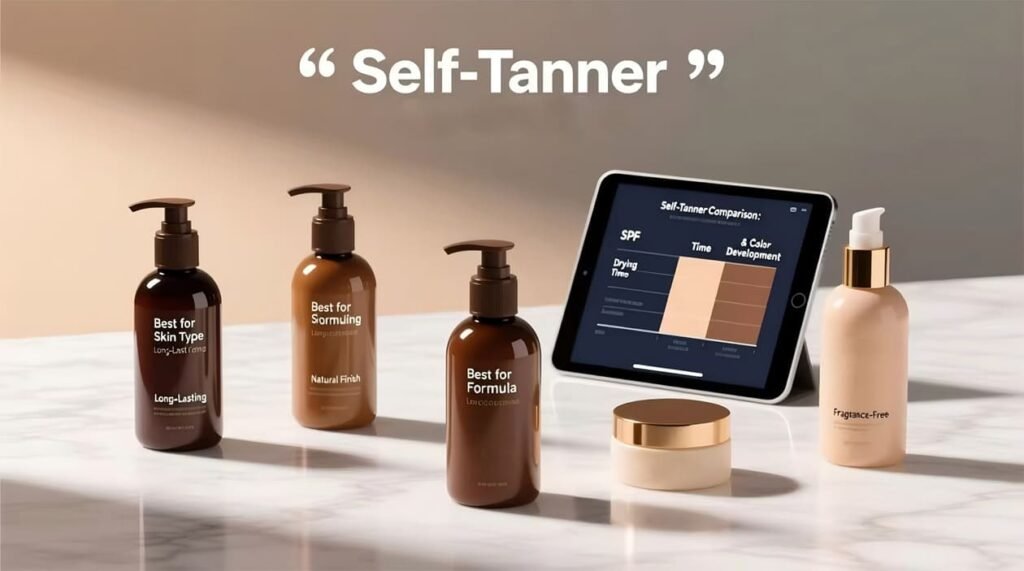
Results commonly last several days, and wear depends on showers, shaving, exfoliation, friction, and hydration. Moisturizing helps it fade evenly; frequent scrubbing makes it fade faster and patchier. Maintain with daily hydration and small touch-ups. Remove with warm water and gentle exfoliation over a day or two rather than trying to erase it in one aggressive session.
Why it fades faster for some people
- hot showers and long baths
- shaving
- scrubs and rough towels
- dry skin shedding unevenly
Hydration makes the fade look smoother.
Low-drama maintenance rhythm
- moisturize daily
- keep showers warm, not scorching
- touch up only where it fades first (shins, arms, chest)
- reset gently when you’re ready instead of constantly stacking layers
Even removal beats fast removal
Warm shower + gentle exfoliating cloth + moisturizer after. Repeat the next day if needed. This keeps skin smoother and results more even when you reapply.
What should brands plan when developing private label top self tanning lotions?
A top private label self tanning lotion is built around predictable application and clean fading first, then depth, scent, and packaging experience. Winning products feel like skincare, spread easily, dry down comfortably, develop into believable tone, and fade evenly. Packaging should dose consistently and resist leakage. Clear usage instructions are part of performance, not an afterthought.
What customers actually reward with repeat purchases
- evenness without advanced technique
- natural tone in daylight
- comfortable wear (no sticky regret)
- fade that doesn’t look patchy
- packaging that doesn’t leak or spit product
The formula decisions that shape user experience
- intensity direction that matches your target customer (beginner vs experienced)
- lotion base that supports smooth fade (hydration and after-feel matter)
- scent strategy that stays wearable for mainstream buyers and offers calm options for sensitive buyers
- tone direction that stays believable across a range of undertones
Packaging choices that reduce complaints
- consistent dosing (predictable amount each pump)
- leak resistance (transfer is already a concern)
- easy handling with wet hands post-shower
Common packaging directions:
- pump bottles for easy full-body dosing
- airless pumps for premium positioning and controlled dispensing
- tubes for travel-friendly formats
Copy-and-send factory brief for faster sampling
Brands can paste this into an inquiry email:
- Target market and channel (US/EU, DTC/Amazon/retail)
- Product type and size (e.g., 200 ml self tanning lotion)
- Desired depth (light/medium/deep) and tone direction (golden/neutral)
- Intensity direction (gradual/medium/express)
- Bronzer style (tinted or clear)
- Texture goal (classic cushioned / lightweight fast-dry / richer overnight)
- Scent direction (fragrance-free / light scent / signature)
- Skin type focus (sensitive-friendly, very dry, humid climate users)
- Packaging preference (pump/airless/tube) and leakage concerns
- Target unit cost range and target retail range
- “Must not happen” list (sticky feel, orange tone, patchy fade, heavy transfer)
Conclusion
Top self tanning lotions aren’t one perfect product for everyone—they’re the products that match your undertone, your routine, and your comfort level, then reward you with even color and a smooth fade. Start with an intensity direction you can control, choose tinted or clear based on how you apply, and treat prep as part of the result: gentle exfoliation the day before, moisturized dry zones, and steady section-by-section blending. Maintain your glow with daily hydration and small touch-ups instead of constant scrubbing and full reapplications. For brands, the “top” standard is reliability: predictable spread, comfortable dry-down, believable tone, clean fading, and packaging that dispenses consistently without leaks. If you’re developing a private label self tanning lotion line, contact Zerun Cosmetic to request a quote and sampling plan—share your target market, desired depth, preferred packaging, and reference products so the development path is clear from the first sample.